What Is Monk Fruit? The Natural Sweetener with Zero Sugar

The first time someone told me to try monk fruit, I nodded politely and then went home and Googled it for twenty minutes because I had absolutely no idea what they were talking about. A fruit? From monks? That makes things sweet? It sounded like something from a medieval apothecary rather than a supermarket shelf.
Turns out, it is genuinely one of the most useful sweeteners I have ever come across — and I have tried a lot of them. Here is everything you actually need to know, without the wellness jargon.
What Is Monk Fruit, Exactly?
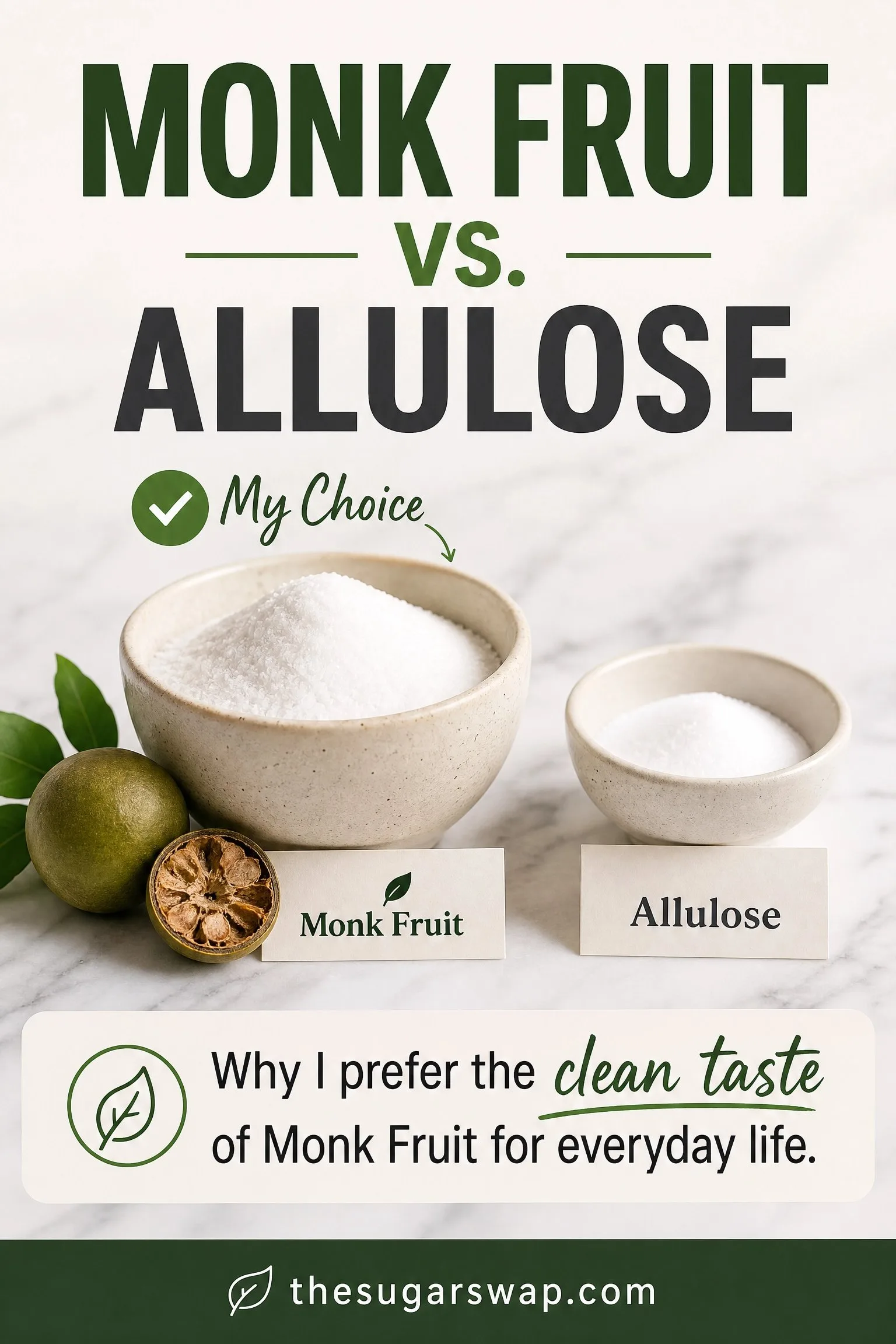
Monk fruit — known in Chinese as luo han guo — is a small, round green fruit that grows on vines in the mountains of southern China. It has been cultivated for centuries, originally by Buddhist monks (hence the name), and was traditionally used in herbal medicine and teas.
The fruit itself looks a bit like a small melon. You are unlikely to ever see it fresh — it goes off quickly and is difficult to export. What reaches you is the extract: a concentrated powder or liquid made by crushing the fruit, collecting the juice, and removing the natural sugars.
What is left behind is something extraordinary: a sweetener that is 150 to 250 times sweeter than sugar, with zero calories, zero glycaemic impact, and — when you get a good quality one — no detectable aftertaste.
"It tastes like sugar behaving itself. Sweet without the spike, clean without the compromise."
Why Does Monk Fruit Have No Calories?
This is the part that trips people up. Regular sugar — sucrose — is metabolised by your body for energy, which is where the calories come from. Monk fruit's sweetness comes from a completely different source: natural antioxidant compounds called mogrosides.
Mogrosides are not absorbed the same way as carbohydrates. They pass through your digestive system largely unprocessed, which means they contribute no calories and cause no rise in blood glucose. The sweetness is real. The metabolic cost is not.
This is also why monk fruit has a glycaemic index of zero — it simply does not affect blood sugar the way conventional sweeteners do. For anyone managing glucose levels, or just trying to avoid the 3pm slump, that matters.
Monk Fruit vs. Sugar — The Numbers
| Per teaspoon equivalent | White Sugar | Monk Fruit |
|---|---|---|
| Calories | 16 | 0 |
| Sugar (g) | 4g | 0g |
| Glycaemic Index | 65 | 0 |
| Aftertaste | None | None (high quality) |
| Caramelises in oven | Yes | No (pure extract) |
| Available in Europe | Yes | Yes (online) |
What Does Monk Fruit Actually Taste Like?
Good monk fruit tastes clean. Sweet, immediate, and then gone — no cooling sensation, no lingering bitterness, no chemical finish. The best quality extracts are genuinely indistinguishable from sugar in drinks and sauces.
The less good news: quality varies enormously between brands. Some cheaper products leave a faint aftertaste that reminds you of artificial sweeteners. This is usually a sign of lower mogroside content or poor processing. When in doubt, look for products that specify Mogroside V — the highest-purity extract — and have minimal added ingredients.
I live in Spain, where monk fruit is not sold in regular supermarkets. I order mine through iHerb — they ship internationally, the prices are reasonable, and the selection is excellent. Lakanto and NOW Foods are both reliable brands. If you're in the US or UK, health food shops and Amazon carry a wide range.
The Different Forms of Monk Fruit
This is where people get confused, so let me break it down simply:
Liquid Drops
Highly concentrated. A few drops sweetens a whole cup of coffee. Ideal for drinks, smoothies, and sauces. Dissolves instantly in both hot and cold liquids. This is what I reach for most often.
Granulated (Blend)
Usually combined with erythritol to give it bulk and a 1:1 sugar replacement ratio. Measures like sugar, behaves like sugar in most recipes. Best for baking, overnight oats, and anything where you want a dry sweetener. Read the label — the best blends have two ingredients: monk fruit extract and erythritol. Nothing else.
Powdered
Finely ground version of the granulated blend. Good for frostings, whipped cream, and anything where you want it to dissolve without any graininess.
Is Monk Fruit Safe?
Yes. Monk fruit extract has been used in China for hundreds of years, and it was granted GRAS status (Generally Recognised As Safe) by the US Food and Drug Administration. It is approved for use in the US, Canada, Australia, and most of Asia. In Europe, it is not yet approved as a novel food ingredient — meaning it cannot be sold as a standalone food additive in EU countries — though this is expected to change as regulatory reviews progress.
There are no known side effects at normal consumption levels. It does not ferment in the gut the way some sweeteners do, which means it is generally well tolerated even by people who find erythritol or xylitol problematic.
Why Monk Fruit Is the Default Sweetener on This Site
Every recipe on The Sugar Swap that requires sweetness uses monk fruit as the default — not because it is perfect for every single situation, but because it is the most consistently reliable option across the widest range of recipes. It works in coffee, in smoothies, in salad dressings, in cheesecake, in muffins. The Avocado Lime Smoothie uses liquid drops. The Low Sugar Raspberry Cheesecake uses granulated. The Low Sugar Chocolate Pound Cake uses granulated blend in place of white sugar, 1:1.
It is not cheap compared to sugar. But you use so little of it — especially the liquid drops — that a single bottle lasts for months. Over time it is not as expensive as it looks on the shelf.