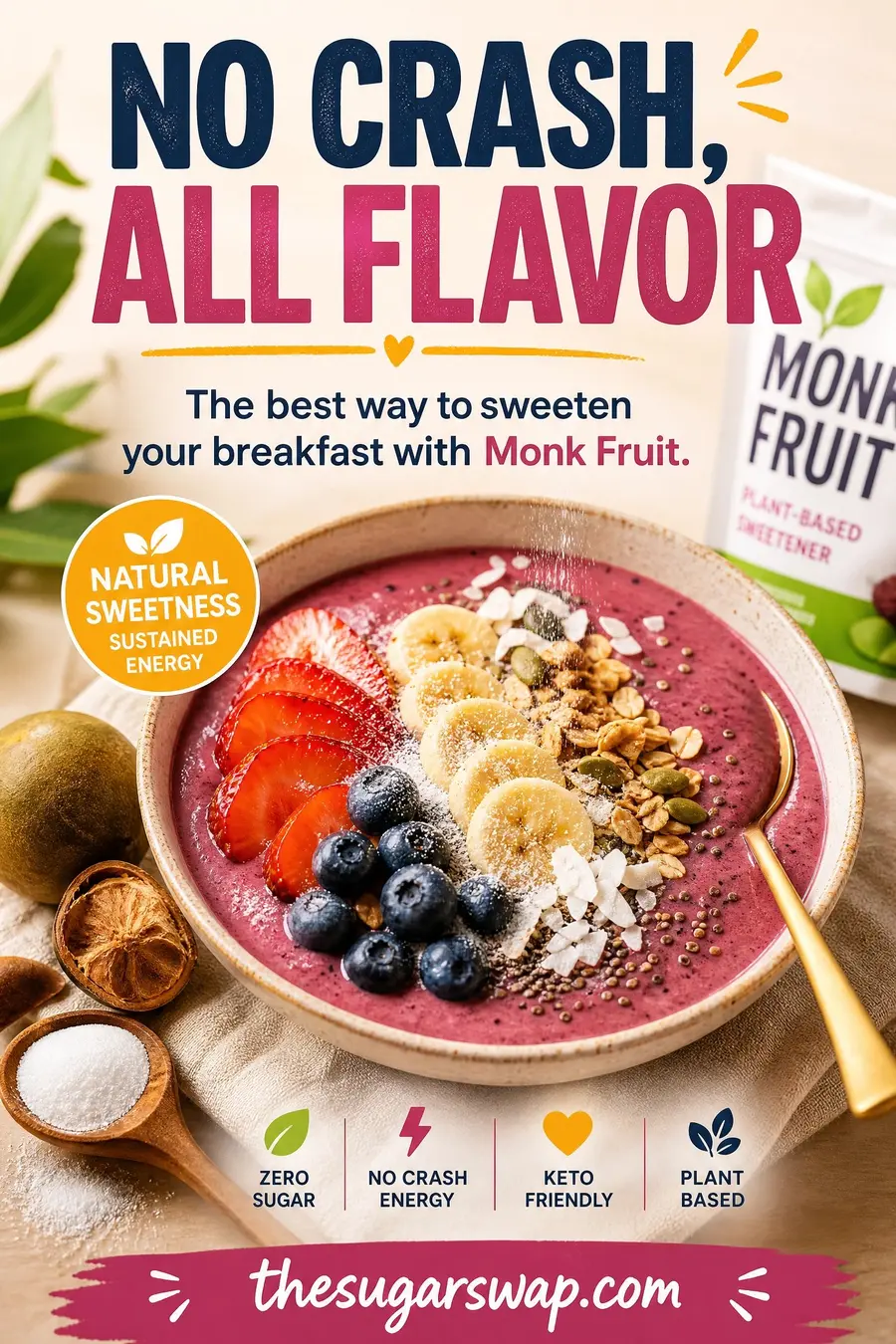
No Crash Breakfast Ideas — How to Sweeten Your Morning with Monk Fruit

For a long time I thought the 10am crash was just a personality trait. Like, some people are morning people and some people need a second coffee and a small lie-down by half past ten. Turns out it is neither of those things. It is breakfast. Specifically, it is the sugar in breakfast — which is considerably more than most people realise.
The average flavoured yogurt contains around 17g of sugar. A bowl of branded granola can have 20g or more. Orange juice — widely considered a health food — delivers 21g in a standard glass. All of that sugar hits your bloodstream fast, your energy spikes, and then by mid-morning it crashes. The tiredness, the brain fog, the sudden desperate need for something sweet — that is not you being weak. That is just blood sugar physics.
The fix is not complicated. It is mostly about knowing where the sugar is hiding, and swapping it out.
"The 10am crash is not a personality trait. It's a breakfast problem. And it's entirely fixable."
Why Breakfast Sugar Hits Harder
After a night of fasting, your blood glucose is at its lowest. This means your body is particularly sensitive to sugar in the morning — a spike first thing has a more dramatic effect than the same amount of sugar at lunch or dinner. The faster the sugar is absorbed, the sharper the spike, and the harder the crash that follows.
Monk fruit has a glycaemic index of zero, which means it provides sweetness without any of this. It does not raise blood glucose at all. Combined with protein, fibre, and healthy fat at breakfast — the three things that slow digestion and keep energy stable — you get a morning that actually keeps you going.
The Sugary Breakfast Swaps
A standard 125g pot of flavoured fruit yogurt contains 14–18g of added sugar. Plain full-fat Greek yogurt has around 4g of naturally occurring lactose — and zero added sugar.
Add a few drops of liquid monk fruit and a handful of fresh berries, and you have something that tastes every bit as sweet and satisfying. The Greek Yogurt Bowl with Berries on this site takes about three minutes to put together and keeps me full until well past noon.
Sugar before: 17g | Sugar after: 4g
Most shop-bought granola is baked with honey, maple syrup, or brown sugar — which is why it tastes so good but also why it causes problems. A 50g serving can contain 8–12g of added sugar before you've added the milk.
Making your own granola with oats, nuts, seeds, a little coconut oil, and granulated monk fruit takes twenty minutes and lasts all week. It toasts beautifully, goes golden in the oven, and tastes genuinely indulgent.
Sugar before: 10g per serving | Sugar after: 0g added sugar
Flavoured instant oat sachets — the ones that dissolve in hot water and taste vaguely of apple or cinnamon — typically contain 10–15g of added sugar per sachet. Plain rolled oats have zero.
The Cinnamon Banana Overnight Oats use granulated monk fruit for sweetness, real cinnamon for warmth, and take two minutes to prep the night before. In the morning you just open the fridge. That's it.
Sugar before: 13g | Sugar after: naturally occurring only
A glass of orange juice contains around 21g of sugar — more than a can of some soft drinks — with almost none of the fibre that slows absorption in whole fruit. The sugar hits fast and hard.
A blended smoothie made with whole fruit, spinach, protein, and a few drops of monk fruit gives you the sweetness and the colour without the blood sugar spike. The Low Sugar Green Smoothie contains 4g of natural sugar. The Berries and Chia Power Smoothie is even more filling.
Sugar before: 21g | Sugar after: 4–6g natural sugar
The Monk Fruit Breakfast Starter Kit
If you are new to all of this and want to start somewhere simple, here is what I would buy first:
- Liquid monk fruit drops — for coffee, tea, and yogurt. Three drops, stir, done.
- Granulated monk fruit blend — for oats, homemade granola, and pancakes.
- Plain full-fat Greek yogurt — your sweetened yogurt replacement. Add your own fruit and monk fruit.
- Rolled oats — the instant sachet replacement. Takes longer but it's the same breakfast.
In the US and UK, most health food stores carry monk fruit sweeteners. Internationally, iHerb ships to most countries and has excellent availability — Lakanto liquid drops and the classic granulated blend are both worth having. If monk fruit is unavailable, liquid stevia is a direct substitute in all of these recipes.
What a No-Crash Morning Actually Feels Like
I want to be honest about this: the first week I cut sugar from breakfast I felt slightly less satisfied, slightly more aware of what I was eating, slightly grumpy about it. The second week was easier. By the third week I had stopped thinking about it entirely — and the 10am crash, the one I had assumed was just who I was, had quietly disappeared.
It is not a dramatic transformation story. It is just that one ordinary morning I reached 11am without wanting to eat everything in the building, and I realised that was the new normal. That will do.