
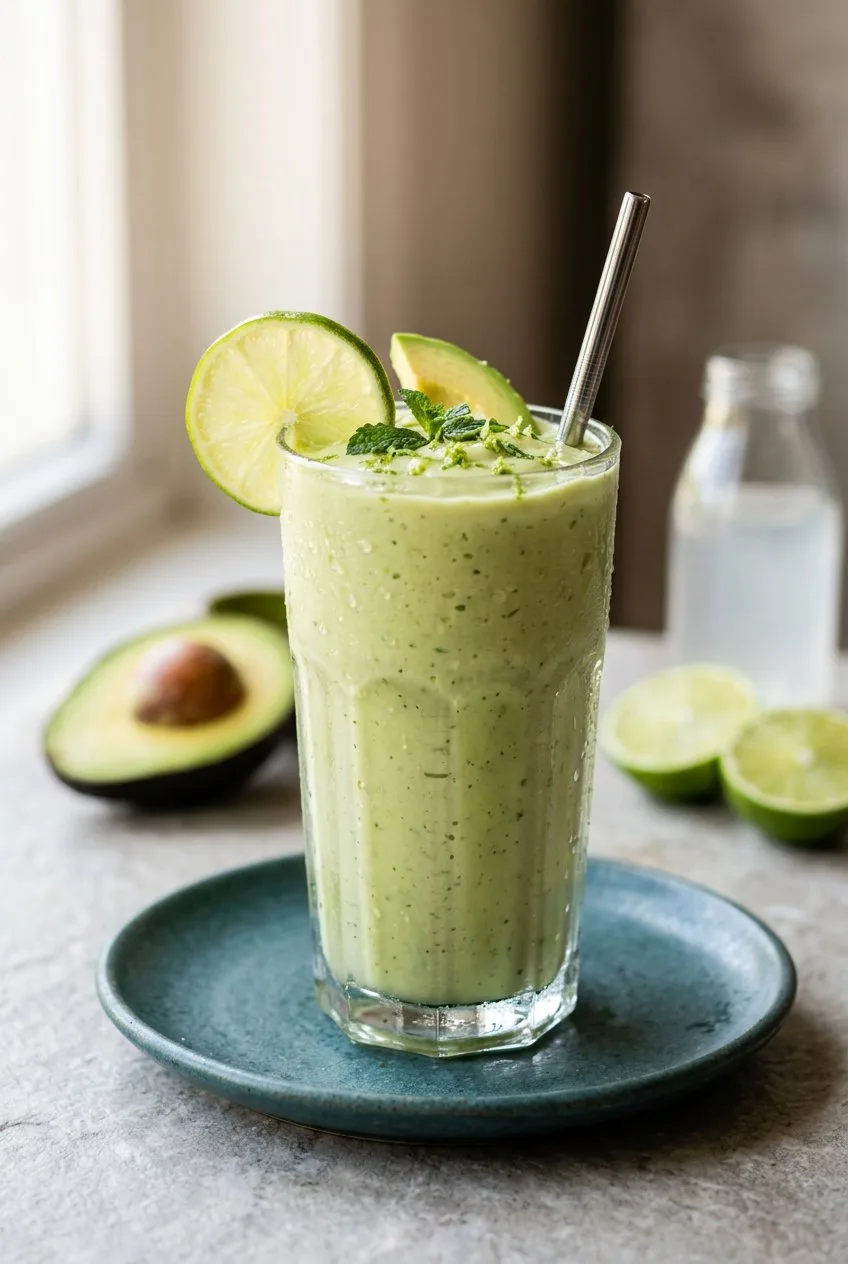
Low Sugar Avocado Lime Smoothie with Monk Fruit
I discovered avocado in smoothies by accident. I was making guacamole and had half an avocado left over and a blender already out, and what followed was either an act of genius or desperation — honestly I’m still not sure which. The creaminess it gives is extraordinary. Like someone added ice cream but forgot to add the sugar.
The sweetened versions of this smoothie — the ones in cafes and health shops — typically add honey, agave, or sweetened yogurt. We swap all of that for a few drops of monk fruit. You get the same sweetness with none of the added sugar.
Lime keeps it sharp and fresh. Coconut water keeps it light. This is summer in a glass.
*Per USDA FoodData Central

The Swap Snapshot
| Typical Version | The Sugar Swap Version | Sugar per serving* |
|---|---|---|
| Sweetened Avocado Smoothie Honey or agave syrup, sweetened yogurt, banana base — 18g sugar per serving |
Low Sugar Avocado Lime Smoothie Monk fruit drops instead of honey, coconut water base, plain yogurt — no added sugar |
18g→3g |
*Based on USDA FoodData Central values. The Sugar Swap is not medical or nutritional advice.
Ingredients
Serves 1 · Scale as needed
- ½ ripe avocado
- 1 lime, juiced
- 200ml coconut water
- 2 tbsp plain Greek yogurt (unsweetened)
- 4–5 drops ⇄ liquid monk fruit — the honey and agave swap
- 4–5 ice cubes
- Pinch of sea salt (lifts everything)

Instructions
- 1
Scoop the avocado flesh into the blender. Add coconut water, lime juice, Greek yogurt, ice and sea salt.
- 2
Blend on high for 45–60 seconds until completely smooth and creamy.
⇄ Swap NoteMonk fruit liquid drops replace honey or agave — both common sweeteners in avocado smoothie recipes. Honey adds around 17g sugar per tablespoon. Monk fruit adds zero. Start with 3 drops and taste — the sweetness level varies between brands.
- 3
Add monk fruit drops, blend for 5 more seconds, taste and adjust. Pour and serve immediately.
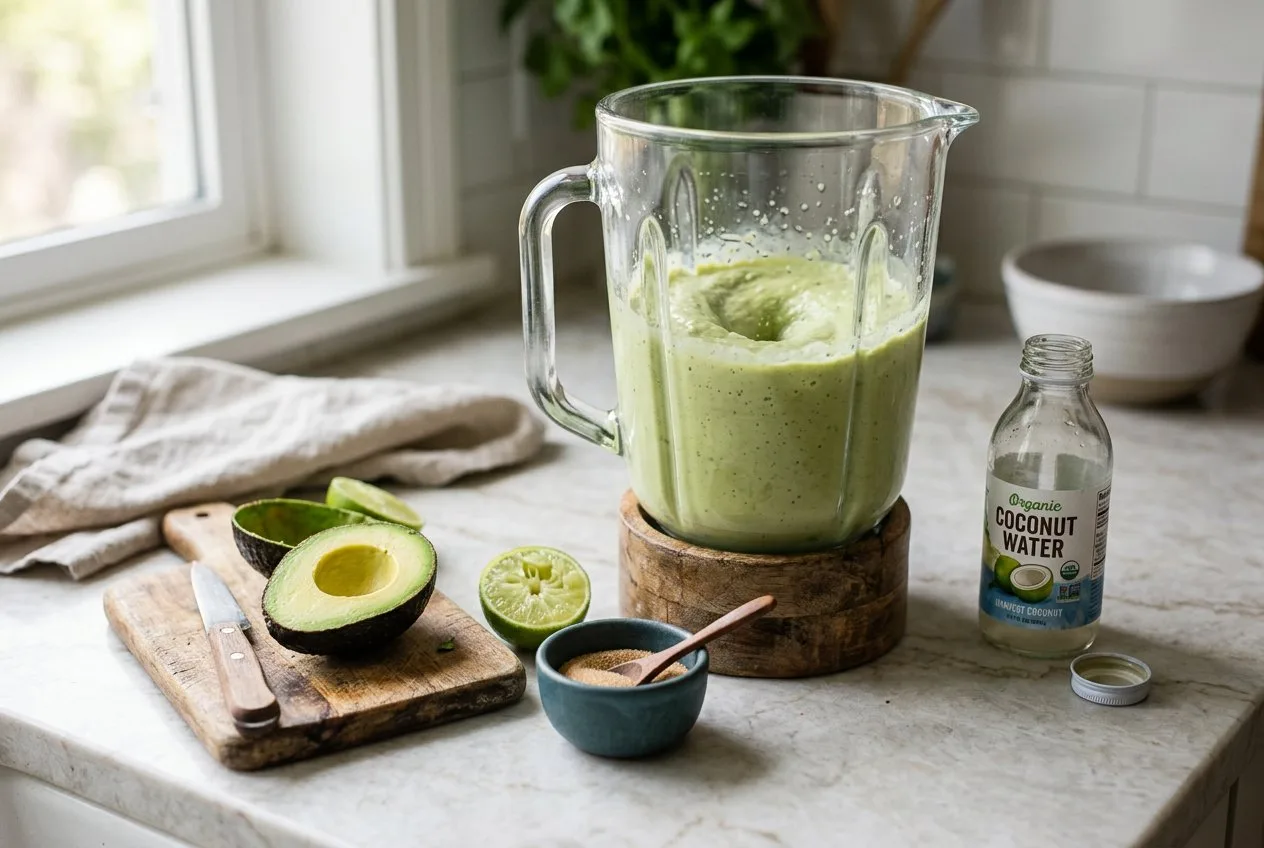
Avocado, lime, coconut water, a tiny pinch of salt — blending into something that looks far more complicated than it is.
The Sweetener Swap: Monk Fruit vs. Honey
Avocado has almost no natural sweetness, which is why most recipes call for honey, agave, or a banana to balance the lime. A tablespoon of honey adds 17g of sugar. A ripe banana adds another 12g. Monk fruit liquid drops have zero sugar and zero calories — they provide sweetness through natural compounds called mogrosides, not through sugar at all. A few drops is all you need. If you can’t find monk fruit drops, liquid stevia works in exactly the same way — use 2–3 drops to start. See the Swap Guide for a full comparison of liquid sweeteners.
Common Mistakes
- Using an unripe avocado. An underripe avocado blends grainy and tastes bitter. It needs to give slightly when you press it. If in doubt, leave it on the counter another day.
- Adding too much monk fruit at once. Add drops gradually and taste as you go. Over-sweetened monk fruit can have a slight aftertaste — the right amount has none.
- Skipping the Greek yogurt. It adds protein and a slight tang that balances the richness of the avocado. Plain coconut yogurt works as a dairy-free swap.
Storage
Best drunk immediately — avocado oxidises and the colour dulls quickly. If you need to store it, press cling film directly onto the surface of the smoothie in the glass to minimise air contact and refrigerate for up to 4 hours. A squeeze of extra lime also slows browning.
Nutrition per serving
*Per USDA FoodData Central · Typical version: 18g sugar · The Sugar Swap is not medical or nutritional advice.
Frequently Asked Questions
Can I use stevia instead of monk fruit?
Yes — liquid stevia works perfectly here. Use 2–3 drops to start and taste. Stevia is slightly more intense than monk fruit so go carefully. Some people notice a slight bitterness at higher amounts — monk fruit tends to be cleaner, but stevia is much easier to find and works well in smoothies.
Can I make this dairy-free?
Absolutely — swap the Greek yogurt for plain unsweetened coconut yogurt. The texture stays creamy and the flavour is just as good. Check the label on your coconut yogurt — some brands add surprisingly large amounts of sugar.
How ripe does the avocado need to be?
Very ripe. It should yield to gentle pressure and the flesh should be creamy green with no brown spots. A slightly underripe avocado blends poorly and tastes bitter. If yours isn’t ready, leave it on the counter for a day — don’t rush it in the fridge.