Baking with Monk Fruit — What Works, What Doesn't, and How to Get Perfect Results

The question I get most often about monk fruit is not what it is or where to find it. It is: but does it actually work in baking? Because people have been burned before. They have tried swapping sugar for something else in a cake, watched it come out pale and dense and slightly strange, and quietly decided that low sugar baking is just inherently inferior.
I have baked a lot of things with monk fruit. Some of them were extraordinary. Some of them needed adjusting. One of them — I will not name which — went in the bin. Here is the honest breakdown.
"Monk fruit baking is not about replacing sugar and hoping for the best. It's about understanding what sugar was doing — and replacing that, specifically."
What Sugar Actually Does in Baking
Before you can swap it out successfully, you need to know what you are replacing. Sugar is not just sweetness. In a baked good, it does all of the following:
- Sweetness — the obvious one.
- Moisture retention — sugar is hygroscopic, meaning it attracts and holds water. This is why cakes stay moist for days. Without it, baked goods dry out faster.
- Browning — sugar caramelises and participates in the Maillard reaction, giving baked goods their golden colour and complex flavour.
- Structure and volume — when creamed with butter, sugar crystals create air pockets. Those pockets make cakes rise and give cookies their spread.
- Preservation — sugar inhibits microbial growth. Baked goods with less sugar have a shorter shelf life.
A granulated monk fruit-erythritol blend handles sweetness perfectly and does a reasonable job with structure and volume. Where it falls short is browning and long-term moisture retention — and once you understand that, you can compensate for it.
The Results by Category
Dense, moist cakes — chocolate pound cake, banana bread, carrot cake — work exceptionally well with a 1:1 monk fruit blend. The extra fat and eggs in these recipes compensate for what monk fruit doesn't provide, and the result is moist, well-risen, and genuinely delicious.
The Low Sugar Chocolate Pound Cake on this site uses a monk fruit blend 1:1 and comes out with a perfect crumb every time. The Low Sugar Zucchini Brownies use it too — the courgette adds moisture that compensates for what monk fruit doesn't retain.
Tip: Add an extra tablespoon of Greek yogurt or a splash more oil to any cake recipe when swapping in monk fruit. It compensates for the reduced moisture retention and gives you a softer result.
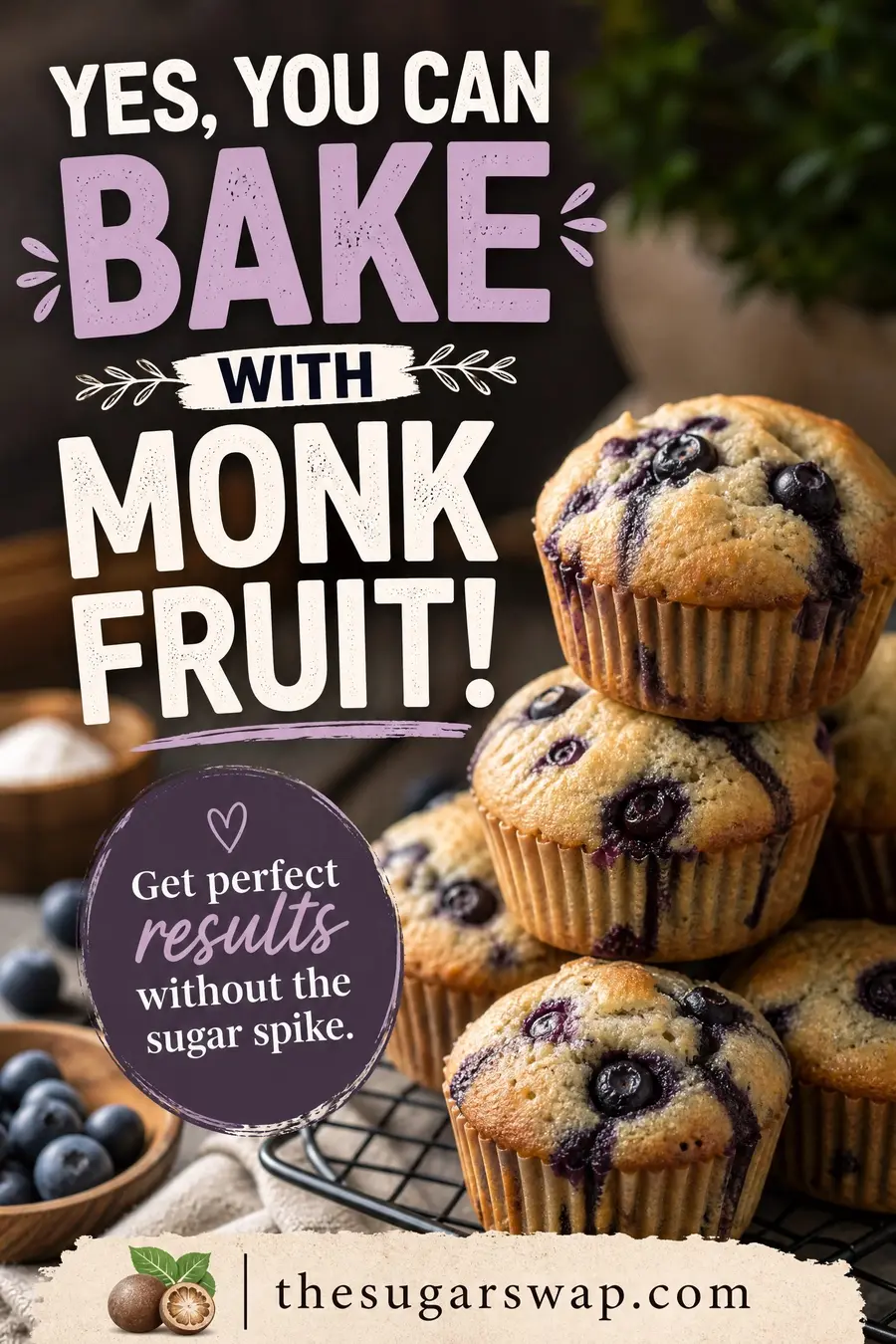
Muffins are forgiving. They tend to have fruit, yogurt, or other moist ingredients that compensate for what monk fruit doesn't provide. The texture is very close to the sugared version, and in a blueberry or banana muffin you genuinely cannot tell the difference.
They will be slightly paler than sugar-baked muffins — the tops won't go as golden. This bothered me at first. It does not affect the taste at all, and after the third batch I stopped noticing.
This is where monk fruit genuinely excels. No-bake cheesecake fillings, mousses, puddings, and creams don't need browning or caramelisation — they need clean sweetness with no aftertaste. A powdered monk fruit blend dissolves completely into cream cheese or whipped cream with zero grittiness.
The Low Sugar Raspberry Cheesecake uses monk fruit in the filling and it is indistinguishable from the full-sugar version.
Cookies are where monk fruit baking requires the most attention. Sugar in cookies does a specific job: it melts in the oven and then re-solidifies as the cookie cools, giving you crisp edges and a chewy centre. Monk fruit blend doesn't behave quite the same way.
The result: cookies baked with monk fruit tend to spread less, be paler, and have a slightly more cakey texture. For the Sugar Free Chocolate Chip Cookies, I tested three versions before landing on the ratio that worked — slightly less monk fruit than the sugar the recipe called for, plus an extra egg yolk for moisture and richness.
Fix: Use ¾ cup monk fruit blend per 1 cup sugar in cookies. Add an extra egg yolk. Press them down slightly before baking as they spread less. Expect a slightly different texture — still excellent, just different.
Sticky glazes, caramel sauces, and anything where you want deep golden colour in the oven will not achieve the same result with pure monk fruit. The Maillard reaction that sugar undergoes requires — sugar.
Fix: For recipes where browning is essential, combine monk fruit blend with a small amount (1–2 tablespoons) of coconut sugar. The coconut sugar caramelises and gives you the colour; the monk fruit does most of the sweetening. You get the look of the sugar-baked version with a fraction of the sugar content.
The Baking Cheat Sheet
| Recipe type | Monk fruit ratio | Adjustment needed |
|---|---|---|
| Cakes and loaves | 1:1 | +1 tbsp yogurt or oil |
| Muffins | 1:1 | None usually |
| Cheesecake filling | 1:1 powdered | None |
| Cookies | ¾:1 | Extra egg yolk, press down |
| Brownies | 1:1 | Add moist ingredient (courgette, date) |
| Glazes and caramel | ½:1 monk fruit + coconut sugar | Coconut sugar for browning |
| Frostings | 1:1 powdered blend | None |
Which Monk Fruit Product to Use for Baking
Not all monk fruit products are the same, and for baking specifically the product choice matters:
- Granulated monk fruit-erythritol blend — the only sensible choice for most baking. Measures 1:1 with sugar, provides bulk, and behaves reasonably well in the oven. Lakanto Classic and Whole Earth are reliable brands available in most countries.
- Pure monk fruit extract (liquid or powder) — too concentrated for baking. You would need to add separate bulk agents, which makes the recipe significantly more complicated. Avoid for baking unless you know what you are doing.
- Powdered monk fruit blend — use this for frostings, whipped cream, and no-bake fillings. Dissolves more finely than granulated and gives a silkier result.
I tested every dessert recipe on this site at least twice before publishing it. If a recipe says monk fruit works, it has been made with monk fruit and tasted by real people. I do not publish theory. The Low Sugar Cinnamon Rolls took four attempts. Worth it.
The Honest Verdict
Baking with monk fruit is genuinely good — not in a "considering it's healthy" way, but actually good. The chocolate pound cake, the raspberry cheesecake, the zucchini brownies: I would serve these to anyone without mentioning they are low sugar, and they would not know.
Cookies are the one area where the difference is noticeable if you are paying attention. They taste excellent; they just look and feel slightly different from a butter-and-white-sugar cookie. Once you adjust your expectations, they become their own thing rather than a lesser version of something else.
Start with a cake or a cheesecake. Get comfortable with how the blend behaves. Then tackle the cookies when you are ready to experiment a little.