My Elegant Indulgence: Pear & Goat Cheese Salad with Low-Sugar Candied Pecans
Candied pecans are one of those things that feel luxurious and seasonal and entirely justified until you look at what they actually are, which is pecans glued together with sugar and baked. A 30g serving from a bag can contain 10–15g of added sugar before the salad has even started.
Making your own with monk fruit takes about seven minutes and produces something genuinely superior — the coating is thinner and crisper, and you can taste the actual pecan underneath instead of just sweetness. They also look more elegant. The salad wins on every count.
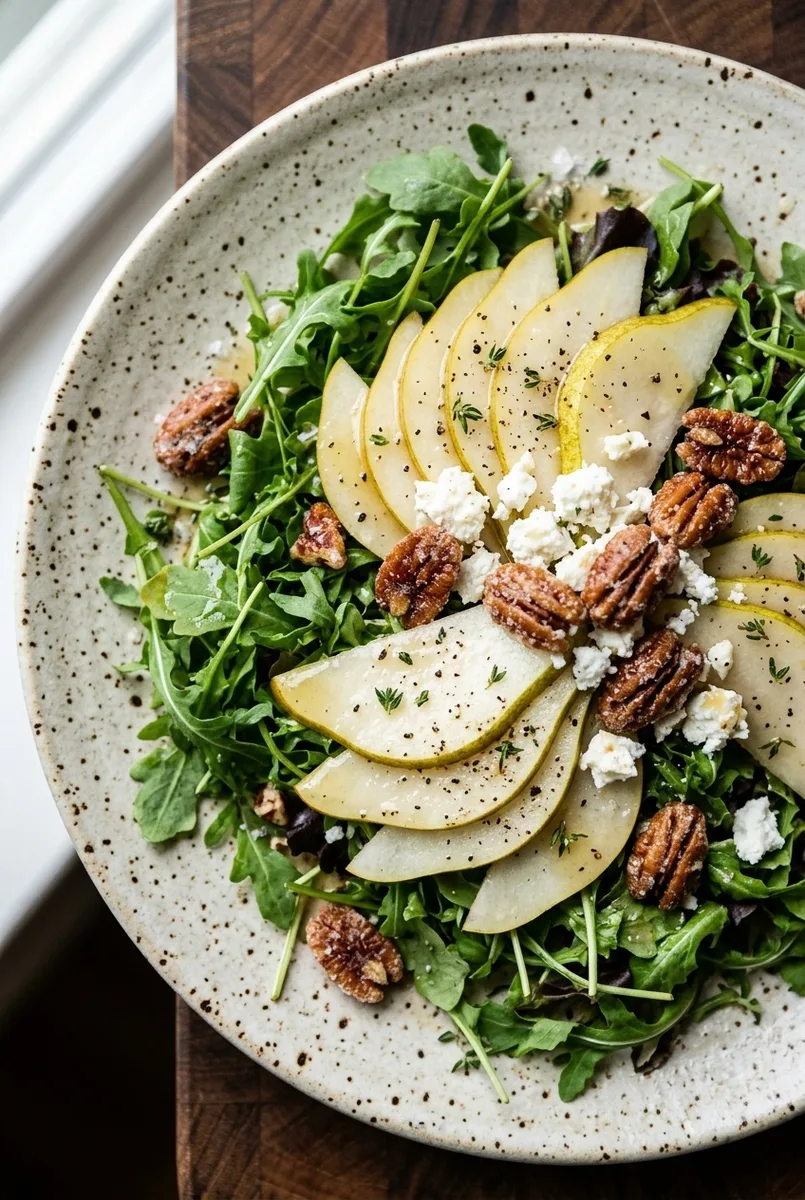
This is the one I make when I want to feel like I have everything together. Pear, goat’s cheese, monk fruit pecans, apple cider vinaigrette. Twenty-five minutes, zero effort of the visible kind.
*Per USDA FoodData Central

The Swap Snapshot
| Typical Version | The Sugar Swap Version | Sugar per serving* |
|---|---|---|
| Pear Salad with Store-Bought Candied Pecans Commercial sugar-coated candied pecans — 35g sugar per serving |
Pear & Goat Cheese Salad Homemade monk fruit candied pecans, apple cider vinaigrette — 12g natural sugar from pear |
35g→12g |
*Based on USDA FoodData Central values. The Sugar Swap is not medical or nutritional advice.
Ingredients
Serves 2 · Scale as needed
- 60g (2 cups) mixed greens
- 1 ripe pear (Bosc or Anjou), thinly sliced
- 30g (¼ cup) goat’s cheese, crumbled
- Monk Fruit Candied Pecans:
- 60g (½ cup) pecans
- 1 tbsp ⇄ monk fruit sweetener — the sugar coating swap
- 1 tbsp water
- Dressing:
- 2 tbsp extra virgin olive oil
- 1 tbsp apple cider vinegar
- salt and freshly ground black pepper to taste

Instructions
- 1
Make the monk fruit candied pecans: in a small non-stick pan, combine the pecans, monk fruit sweetener, and water. Cook over medium heat, stirring constantly, for 5–7 minutes until the water evaporates and the sweetener coats the pecans.
⇄ Swap NoteMonk fruit replaces the sugar syrup used in traditional candied nuts. Unlike sugar, monk fruit doesn’t caramelise — but it does create a light, crisp coating as it dries. The result is a thinner, cleaner-tasting candied nut with none of the added sugar. See the full guide to using monk fruit instead of sugar.
- 2
Spread the pecans on a sheet of parchment paper to cool and crisp. They harden as they cool — do not move them too soon.
- 3
In a large bowl, combine the mixed greens, thinly sliced pear, and crumbled goat’s cheese.
- 4
Whisk together the olive oil, apple cider vinegar, salt and pepper.
- 5
Drizzle the dressing over the salad and toss gently to combine.
- 6
Top with the monk fruit candied pecans. Serve immediately.
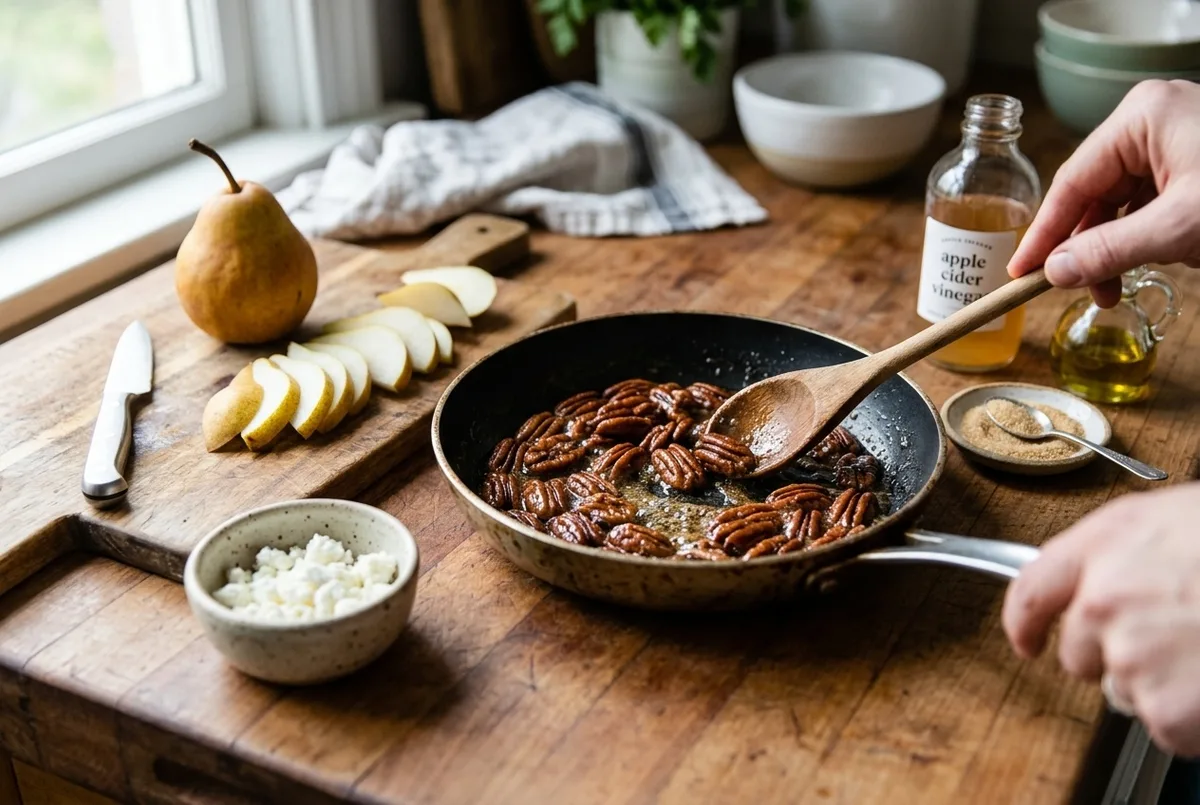
Pecans, monk fruit, water — seven minutes in a pan, five minutes on parchment to cool. Then the best part of any salad is done.
The Nut Swap: Monk Fruit Candied Pecans vs. Store-Bought Sugar-Coated
Store-bought candied pecans are typically coated in sugar syrup and baked — a 30g serving can contain 10–15g of added sugar. Homemade monk fruit candied pecans use the same principle — liquid sweetener coating nuts, then drying into a crisp shell — but with monk fruit instead of sugar. The result has zero added sugar and, honestly, more pecan flavour because the coating is lighter. The pear brings 12g of natural sugar per serving, all the sweetness this salad needs. For more on how monk fruit works as a cooking sweetener, see the monk fruit swap guide and the complete Swap Guide.
Common Mistakes
- Not stirring the pecans constantly. They go from coated to burnt fast. Keep stirring throughout the 5–7 minutes.
- Moving the pecans before they cool. They need 5 minutes on parchment to harden properly. Warm pecans will stick together and to the paper.
- Using an underripe pear. The pear needs to be ripe enough to be slightly soft and sweet. Hard, unripe pear doesn’t have the flavour this salad relies on.
Storage
Best eaten immediately once assembled. The monk fruit candied pecans keep in an airtight container at room temperature for up to 5 days — make a bigger batch and keep them for the week.
Nutrition per serving
*Per USDA FoodData Central · Typical version: 35g sugar · All sugar naturally occurring from pear · The Sugar Swap is not medical or nutritional advice.
Frequently Asked Questions
Can I use walnuts instead of pecans?
Yes — walnuts work well with pear and goat’s cheese. The monk fruit coating method is exactly the same. Pecans are slightly sweeter and more buttery, but walnuts give a more robust, slightly bitter contrast that some people prefer.
What pear variety works best?
Bosc pears hold their shape well when sliced thin and have a honeyed, slightly earthy sweetness. Anjou is juicier and more delicate. Either works — avoid Bartlett, which is too soft and breaks down.
Can I use stevia instead of monk fruit for the pecans?
Yes — granulated stevia works the same way in this method. Use the same amount and follow the same process. The coating won’t look exactly the same but the result is similar.