
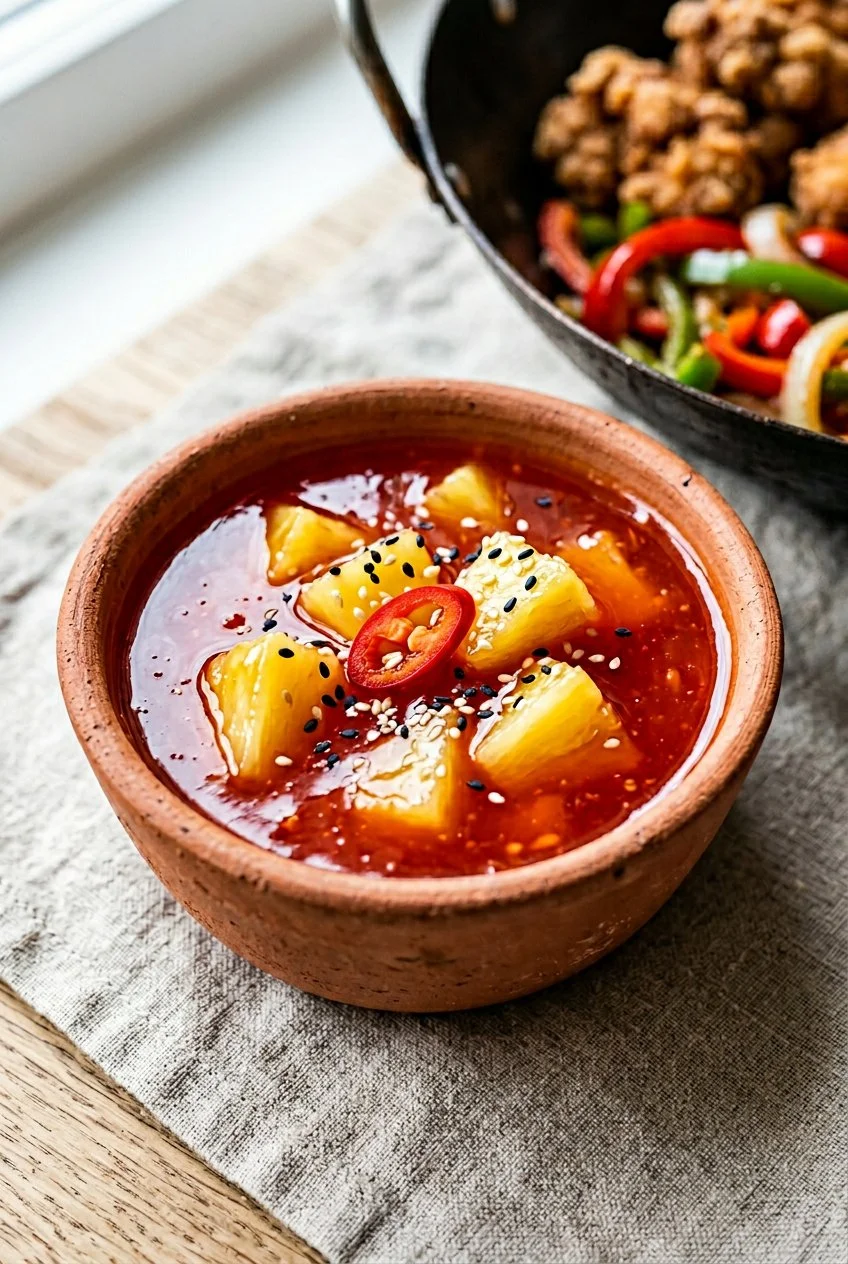
Low Sugar Sweet and Sour Sauce — The Takeout Swap
Sweet and sour sauce is one of those things that sounds like it's half healthy — the sour part, presumably. Then you check the label and find 22 grams of sugar in a quarter cup. That's more than five teaspoons in a sauce you're pouring over dinner.
This version uses fresh pineapple for natural sweetness and monk fruit to balance it — the result is bright, glossy, properly tangy, with little pockets of pineapple that taste like actual pineapple rather than a memory of pineapple from a tin.
It pairs beautifully with crispy chicken, prawn stir-fry, or honestly just used as a dipping sauce while you pretend you're not eating it straight.
*Per USDA FoodData Central

The Swap Snapshot
| Typical Version | The Sugar Swap Version | Sugar per ¼ cup* |
|---|---|---|
| Takeout Sweet & Sour Canned pineapple juice, white sugar, ketchup — takeout sugar in a bottle | Low Sugar Sweet and Sour Sauce Fresh pineapple, rice vinegar, monk fruit | 22g→6g |
*Based on USDA FoodData Central values. The Sugar Swap is not medical or nutritional advice.
Ingredients
Serves 8 (¼ cup) · Scale as needed
- 1 cup fresh pineapple, finely diced or pulsed
- ½ cup water
- ⅓ cup rice vinegar (unsweetened)
- 2 tbsp tomato paste
- 2 tbsp ⇄ monk fruit granulated — the sweetener swap
- 1 tbsp tamari or soy sauce
- ½ tsp xanthan gum (to thicken)

Instructions
- 1
In a saucepan, combine the fresh pineapple, water, rice vinegar, tomato paste, monk fruit, and tamari.
- 2
Bring to a boil, then reduce heat and simmer for 10 minutes until the pineapple softens slightly and the flavours meld.
- 3
Whisk in the xanthan gum and simmer for another 2 minutes until the sauce is glossy and thick.
⇄ Swap NoteXanthan gum replaces the cornstarch typically used to thicken sweet and sour sauce, without adding any extra carbohydrates.
- 4
Taste and adjust — more rice vinegar for tang, more monk fruit for sweetness. Serve with crispy chicken or shrimp stir-fry.
Using Fresh Pineapple for Natural Sweetness
Traditional sweet and sour sauce relies on canned pineapple juice, white sugar, and sometimes ketchup (which also contains sugar) for its characteristic flavour. Fresh pineapple provides natural fruit sweetness alongside real texture, while monk fruit handles the extra sweetness needed to balance the vinegar. Read our Hidden Sugar in Your Favourite Sauces post to see just how much sugar is hiding in takeout-style sauces.
Common Mistakes
- Using tinned pineapple. It goes mushy and the extra syrup throws off the balance. Fresh is the only way here.
- Boiling too hard. A gentle simmer keeps the pineapple intact and prevents the sauce scorching at the edges.
Storage
Store in a sealed jar in the fridge for up to 5 days. Reheat gently on the hob, adding a splash of water if it thickens too much.
Nutrition per serving (8 (¼ cup))
*Per USDA FoodData Central · Typical version: 22g sugar · The Sugar Swap is not medical or nutritional advice.
Frequently Asked Questions
Can I use tinned pineapple in a pinch?
Yes — drain it very well and pat dry. Use pineapple in juice (not syrup) and reduce the monk fruit slightly since it will be sweeter than fresh.
What does this go well with?
Crispy chicken, prawns, pork, tofu — anything that benefits from that sweet-sour coating. Also excellent as a dipping sauce alongside the Thai Peanut Sauce for a full spread.
