
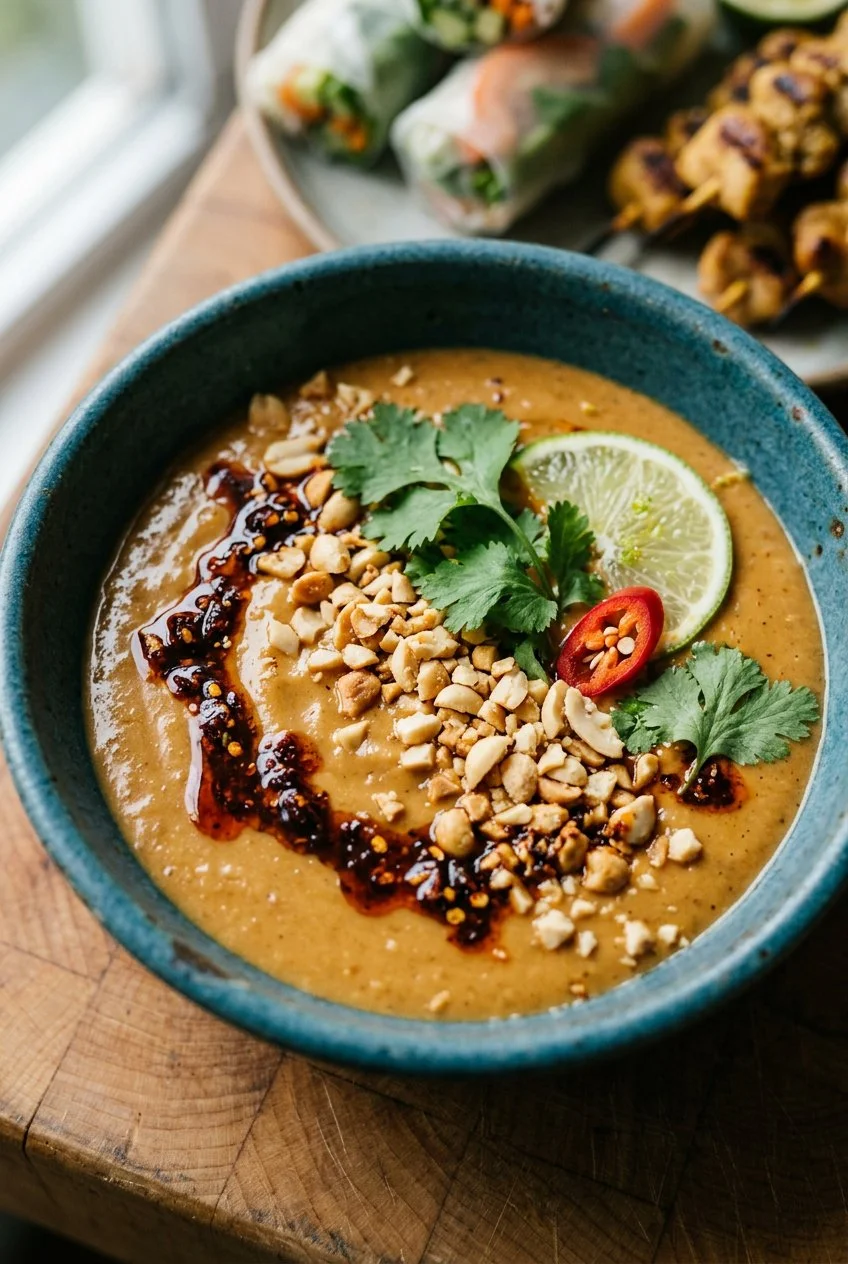
No Sugar Added Thai Peanut Sauce — The Satay Swap
Thai peanut sauce is one of those sauces that tastes healthy — peanuts are good for you, right? And lime! Fresh herbs! But the version you get in restaurants is made with brown sugar and sweetened coconut milk and can contain 8 grams of sugar per two tablespoons.
This version has all the creaminess, all the nutty depth, all the fresh lime brightness — and the heat from the red curry paste that makes you want to dip everything you own into it. What it doesn't have is any of the added sugar.
It works as a dipping sauce, a salad dressing, a noodle sauce, and genuinely good just eaten off a spoon. Not that I've done that. More than twice.
*Per USDA FoodData Central

The Swap Snapshot
| Typical Version | The Sugar Swap Version | Sugar per 2 tbsp* |
|---|---|---|
| Thai Restaurant Peanut Sauce Brown sugar, sweetened coconut milk — hidden sugar in every spring roll | No Sugar Added Thai Peanut Sauce Natural peanut butter, lime, monk fruit | 8g→1g |
*Based on USDA FoodData Central values. The Sugar Swap is not medical or nutritional advice.
Ingredients
Serves 8 (2 tbsp) · Scale as needed
- ½ cup natural peanut butter (unsweetened)
- ½ cup unsweetened full-fat coconut milk (canned)
- 2 tbsp fresh lime juice
- 1 tbsp tamari or soy sauce
- 1 tsp red curry paste (check for no added sugar)
- 1 tsp ⇄ monk fruit liquid or granulated — the sweetener swap
- 1 tsp fresh ginger, grated
- 1–2 tbsp hot water (to thin if needed)

Instructions
- 1
In a medium bowl, whisk together the peanut butter, coconut milk, lime juice, tamari, red curry paste, monk fruit, and ginger.
- 2
If the sauce is too thick, add hot water one tablespoon at a time until it reaches a creamy, pourable consistency.
⇄ Swap NoteUnsweetened full-fat coconut milk replaces the sweetened version used in restaurant peanut sauce. The fat content gives you the same richness without any added sugar.
- 3
Taste and adjust — more lime for brightness, more monk fruit for sweetness, more curry paste for heat.
- 4
Serve immediately as a dip for spring rolls, satay skewers, or as a dressing for noodle salads.
Avoiding Hidden Sugars in Thai Cooking
Thai cooking traditionally balances four flavours: sweet, sour, salty, and spicy. The sweet element usually comes from palm sugar or brown sugar. Monk fruit provides the same sweetness signal without the glycaemic impact, while the natural sugars in the peanut butter and coconut milk provide background sweetness that makes the swap seamless. For more on sweetener options and how they compare, visit the Swap Guide.
Common Mistakes
- Using sweetened peanut butter. Check the ingredients. Many popular brands add sugar, palm oil, or both. Natural peanut butter with just peanuts is what you need.
- Using light coconut milk. It's too watery and the sauce ends up thin and flavourless. Full-fat canned coconut milk only.
Storage
Store in a sealed jar in the fridge for up to 5 days. It thickens when chilled — thin with a splash of warm water and stir well before serving. Does not freeze well.
Nutrition per serving (8 (2 tbsp))
*Per USDA FoodData Central · Typical version: 8g sugar · The Sugar Swap is not medical or nutritional advice.
Frequently Asked Questions
Can I make this nut-free?
Yes — sunflower seed butter works well as a substitute. The flavour is slightly different but the texture and richness are similar.
How do I use this as a noodle sauce?
Thin it further with a little extra warm water and tamari, then toss through cooked rice noodles or zucchini noodles. Add a squeeze of lime before serving.
