The Muffin That Lets the Banana Do Its Job
Three ripe, spotty bananas contain around 36g of natural sugar between them. Most banana muffin recipes then add 150–200g of brown sugar on top of that. I've never fully understood this. The banana is right there. It came to work. It brought everything it needs.
This version uses monk fruit for a small sweetness top-up and lets the banana handle the rest. The result is 4g of natural sugar per muffin — all from the banana, milk, and yogurt — with 0g added. They're soft without being fragile, sweet without tasting like a birthday cake, and entirely comfortable next to a pencil case.
The spottier the banana, the better the muffin. This is not a coincidence.
*Estimated using USDA FoodData Central

The Swap Snapshot
| Typical Version | The Sugar Swap Version | Sugar per muffin* |
|---|---|---|
| Banana muffin with brown sugar Brown sugar added on top of banana's natural sweetness — 19g total, 16g added |
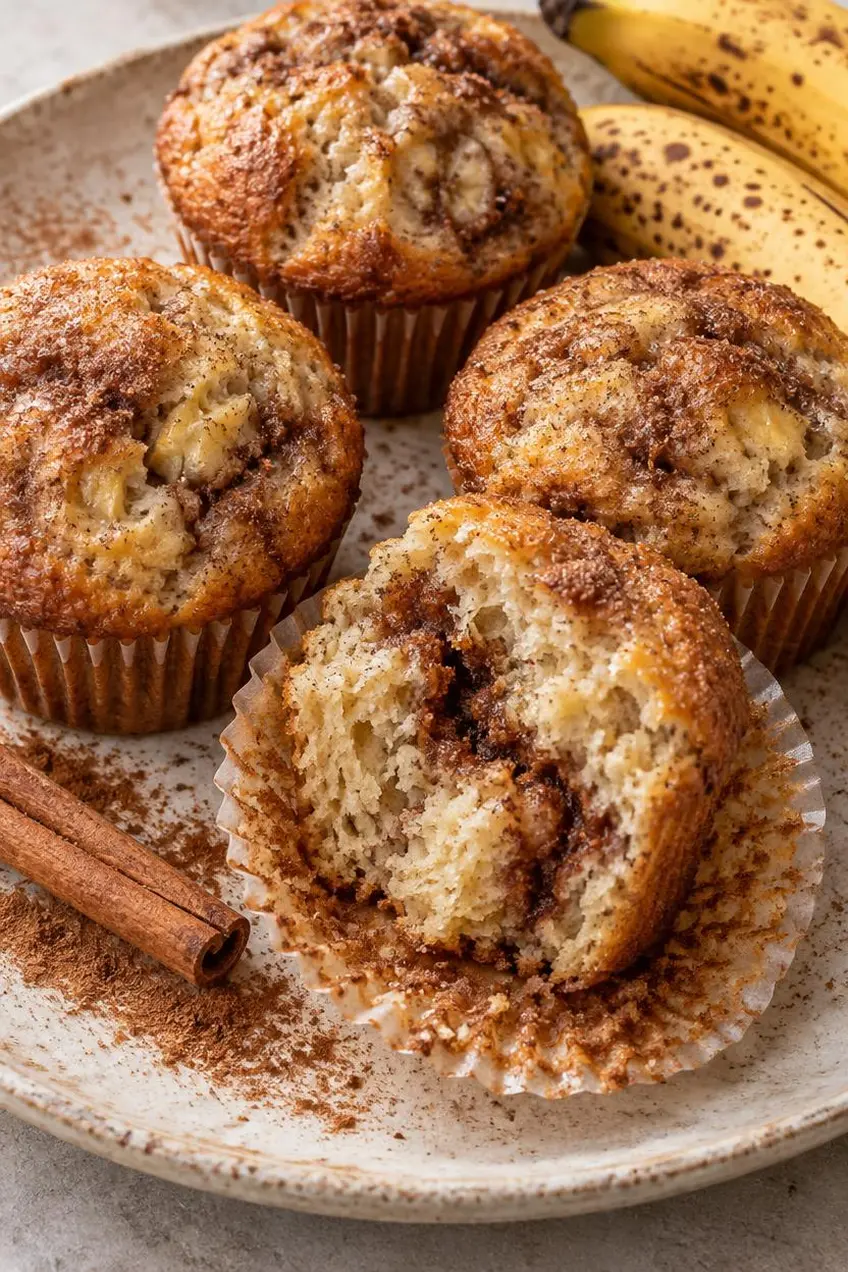
Cinnamon Banana Muffins with Monk Fruit Ripe banana does the sweetening, monk fruit tops it up — 4g total, all natural, 0g added |
19g→4g |
*Estimated using USDA FoodData Central. Not medical advice.
Ingredients
Makes 12 muffins · Keep 3 days or freeze 2 months
- 180g (1½ cups) plain flour
- 1 tsp ground cinnamon
- 1 tsp baking powder
- ½ tsp baking soda
- ¼ tsp fine sea salt
- 300g (~3 medium) ⇄ very ripe mashed banana — the primary sweetener swap
- 2 large eggs
- 120g (½ cup) plain Greek yogurt
- 50ml (3½ tbsp) neutral oil
- 50g (3½ tbsp) ⇄ granulated 1:1 monk fruit baking blend — the brown sugar top-up swap
- 1 tsp vanilla extract

Instructions
- 1
Heat oven to 180°C / 350°F. Line a 12-hole muffin tin with paper cases.
- 2
Whisk the flour, cinnamon, baking powder, baking soda, and salt together.
- 3
Mash the banana well in a large bowl, then whisk in the eggs, yogurt, oil, monk fruit blend, and vanilla until smooth.
⇄ Swap NoteThree ripe bananas provide around 36g of natural sugar for the whole batch — about 3g per muffin before monk fruit is added. Monk fruit gives the gentle sweetness top-up without adding any more. Allulose would add extra moisture here and make the muffins too soft and fragile for a lunchbox. See monk fruit vs allulose for why.
- 4
Fold the wet mixture into the dry until just combined.
- 5
Divide between the muffin cases. Bake 18–21 minutes until risen and springy to the touch.
- 6
Cool 10 minutes in the tin, then transfer to a rack. Cool completely before packing.
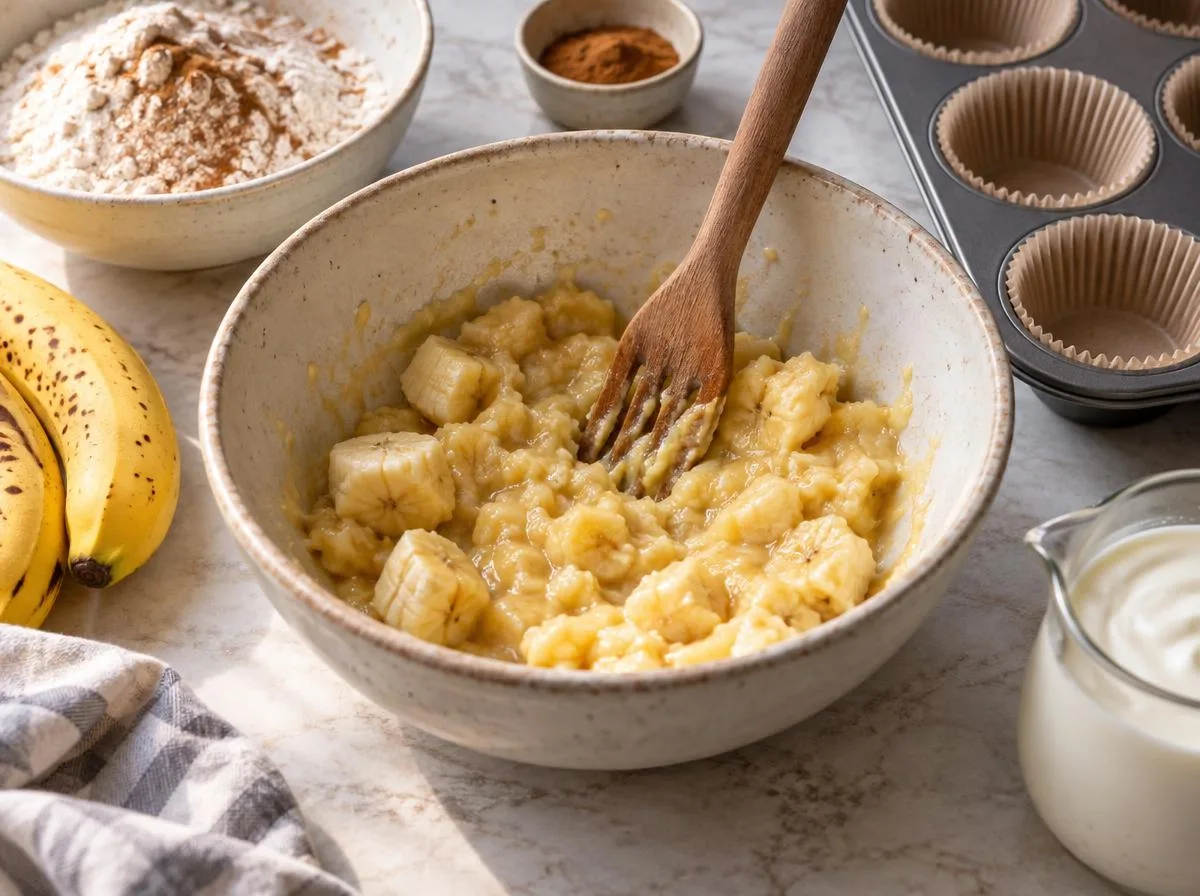
Spotty ripe bananas, mashed and ready. The darker the banana, the sweeter and more flavourful the muffin.
Why the Banana Is the Sweetener Here
Three ripe bananas contain around 36g of natural fructose for the whole batch — that's the primary sweetener doing the heavy lifting. Most banana muffin recipes add 150–200g of brown sugar on top of that because the recipe was designed around an average banana, not a properly ripe one. A spotty banana is already doing the job brown sugar was hired to do. Monk fruit here is just finishing the job off — a small top-up to bring the sweetness to the right level without adding any more sugar. Allulose would add extra moisture and make the muffins fragile. The same principle applies in the Pumpkin Spice Muffins — when the main ingredient brings sweetness, monk fruit is all you need. More on this in the Swap Guide.
Common Mistakes
- Using under-ripe bananas. Yellow or greenish bananas haven't developed their full natural sweetness yet. Wait for spots — or freeze yellow ones and defrost them.
- Overmixing. Same rule as all muffins: stop the moment the flour is incorporated. A few lumps are correct.
- Using allulose instead of monk fruit. Allulose adds moisture that makes these muffins soft and fragile — not ideal when they're going in a bag. Monk fruit only here.
Storage
Keep in an airtight container for 3 days at room temperature. Freeze for up to 2 months — defrost at room temperature for 1–2 hours or microwave for 30 seconds from frozen.
Nutrition per muffin
*Estimated using USDA FoodData Central · Typical version: 19g sugar · All 4g naturally occurring from banana, yogurt · 0g added sugar · Not medical advice.
Frequently Asked Questions
Can I use frozen bananas?
Yes — frozen and defrosted bananas are often sweeter and more intensely flavoured than fresh. Drain any excess liquid after defrosting before mashing.
Can I add anything to the batter?
Yes — chopped walnuts, a handful of 85% dark chocolate chips, or a swirl of almond butter all work well. Fold them in at the end of step 4.
Why monk fruit and not allulose here?
Allulose adds moisture to baked goods — which is great in the granola bars and cookies where chew and structure are the goal, but here it would make the muffins too wet and fragile to hold their shape in a lunchbox. Monk fruit just adds sweetness, which is all that's needed.