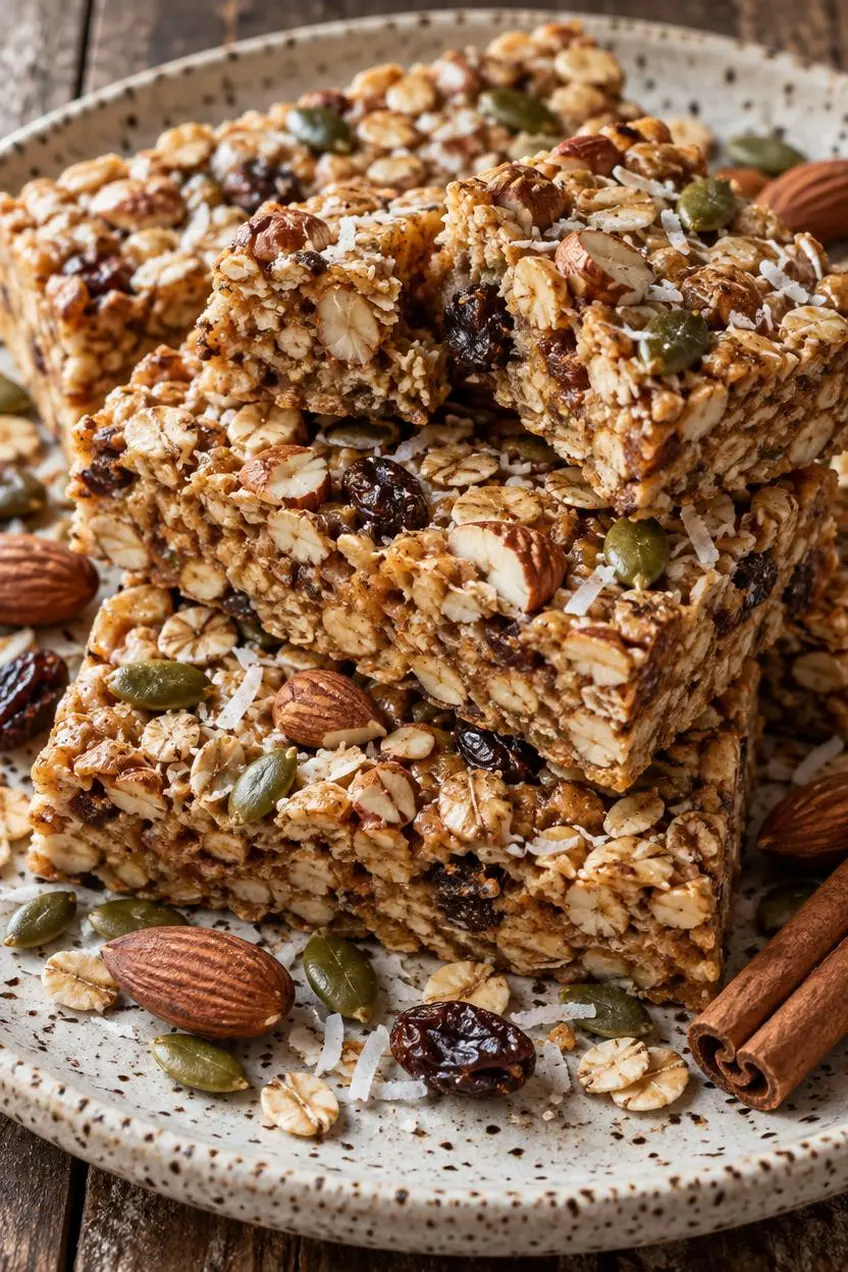
The Granola Bar That Actually Stays in One Piece
I have made many batches of granola bars with high-intensity sweeteners and no binding agent. I know exactly what happens. You press them into the tin, they look promising, you cut them into bars, and then you pick one up and it becomes granola. Enthusiastic, delicious granola. But not a bar.
The problem isn't the oats. It's not the nuts. It's that honey and maple syrup aren't just sweeteners in a granola bar — they're structural. They melt, coat everything, and set into a sticky matrix that holds the whole thing together. Take that away and replace it with a powder and you're removing the bricks and keeping the wallpaper.
Allulose fixes this. It behaves like a liquid sugar when warmed — it melts, it coats, it binds. These bars stay chewy for days, hold together in a lunchbox, and have 1g of sugar per bar instead of the 8g in a honey-bound version.
*Per USDA FoodData Central estimates

The Swap Snapshot
| Typical Version | The Sugar Swap Version | Sugar per bar* |
|---|---|---|
| Honey or maple syrup bound granola bar Honey provides sweetness and binding — 8g total sugar per bar |
Allulose-bound granola bar Allulose provides the same binding and chew — 1g natural sugar, 0g added sugar |
8g→1g |
*Estimated using USDA FoodData Central. Values per bar based on 10 bars per batch. The Sugar Swap is not medical or nutritional advice.
Ingredients
Makes 10 bars · Keep in airtight container up to 5 days
- 160g (1¾ cups) rolled oats
- 60g (½ cup) chopped almonds
- 40g (3 tbsp) pumpkin seeds
- 30g (3 tbsp) sunflower seeds
- 20g (¼ cup) unsweetened shredded coconut
- 30g (3 tbsp) raisins, chopped if large
- 80g (⅓ cup) smooth almond butter
- 30g (2 tbsp) melted coconut oil
- 80g (⅓ cup) ⇄ allulose — the honey and maple syrup swap
- 1 tsp vanilla extract
- ½ tsp ground cinnamon
- ¼ tsp fine sea salt

Instructions
- 1
Heat oven to 175°C / 350°F. Line a 20cm square tin with baking paper, leaving enough overhang to lift the bars out later.
- 2
Mix the oats, almonds, pumpkin seeds, sunflower seeds, coconut, raisins, cinnamon, and salt together in a large bowl.
- 3
Warm the almond butter, coconut oil, and allulose in a small saucepan over low heat, stirring until smooth and glossy. Do not boil. Stir in the vanilla.
⇄ Swap NoteThis is the key moment. Allulose melts and behaves like a liquid sugar when warmed — it coats the oat mixture and sets into a sticky, chewy binder when cooled and baked. Monk fruit cannot do this on its own. It sweetens, but it doesn't bind. For the full breakdown of when to use allulose vs monk fruit, see the sweetener comparison post.
- 4
Pour the warm allulose mixture over the oat mixture and stir until every oat is coated.
- 5
Press very firmly into the prepared tin. Use the base of a glass to compact it as tightly as possible — this is not optional.
- 6
Bake 18–22 minutes until the edges are lightly golden. Cool completely in the tin. Chill 20 minutes before slicing for cleanest cuts.
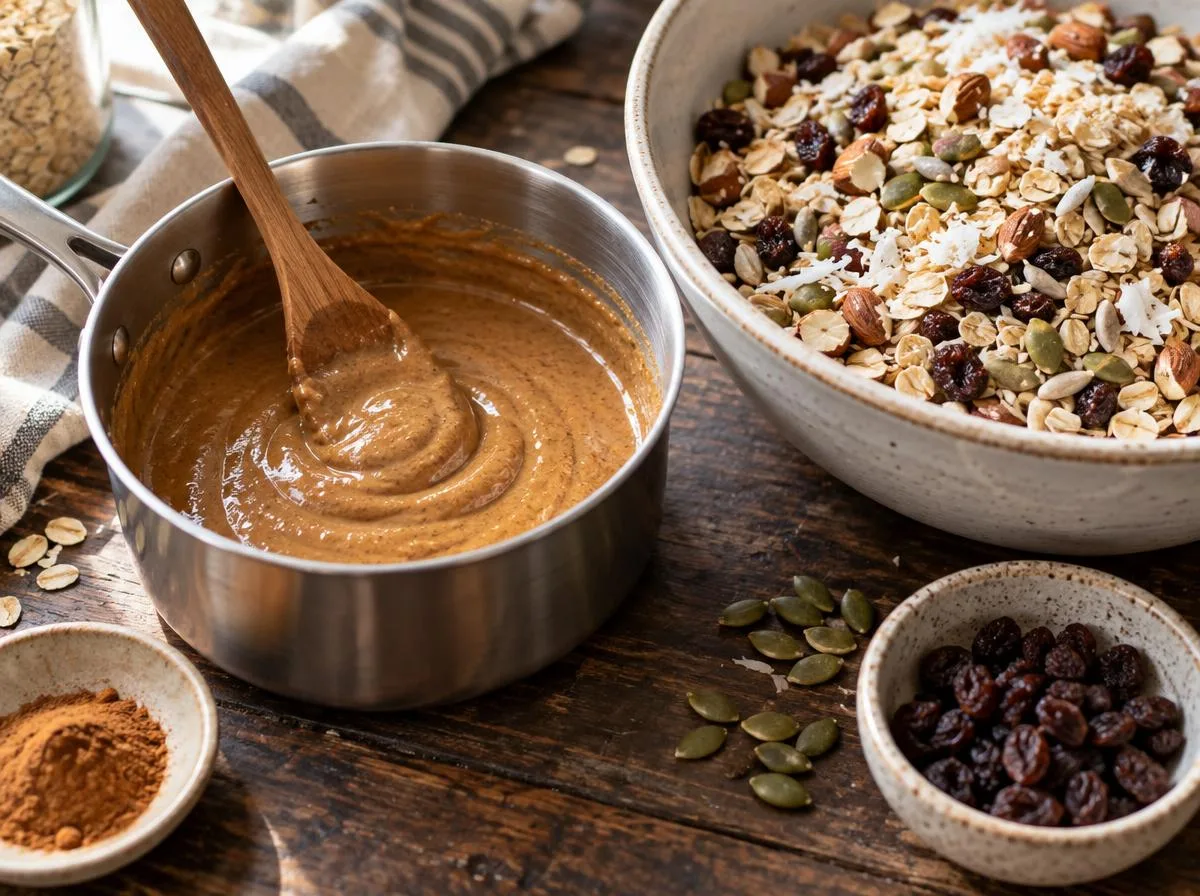
The allulose melted with almond butter — glossy, thick, and ready to bind. This is what holds the bars together.
Why Allulose and Not Monk Fruit?
In a granola bar, honey or maple syrup isn't just providing sweetness — it's the structural binder. When warmed, it melts into a thick syrup that coats every oat, seed, and nut. When baked and cooled, it sets into the sticky matrix that holds the bar together. A high-intensity sweetener like monk fruit provides the sweetness but none of the physical behaviour. Allulose does both — it's approximately 70% as sweet as sugar and, crucially, behaves like a liquid sugar when heated, providing the same binding and chew without the added sugar. This is why allulose is the swap for the texture-critical recipes on this site, and monk fruit is for everything else.
Common Mistakes
- Not pressing firmly enough. The single most important step. If they're not compacted tightly, they fall apart when cut. Press hard.
- Cutting while warm. They need to be completely cold — ideally chilled — before you cut them. Warm bars crumble.
- Boiling the allulose mixture. Warm it gently over low heat until smooth. Aggressive boiling can cause allulose to crystallise and the bars won't set properly.
Storage
Wrap individually in baking paper and keep in an airtight container for up to 5 days. They firm up overnight and are sturdier the next day — which is exactly right for a lunchbox. Freeze for up to 2 months; defrost at room temperature for an hour.
Nutrition per bar
*Estimated using USDA FoodData Central values · Typical version: 8g sugar (from honey) · Allulose contributes 0g sugar · The Sugar Swap is not medical advice.
Frequently Asked Questions
Can I use monk fruit instead of allulose?
Not on its own, no. Monk fruit adds sweetness but doesn't provide the liquid binding that allulose does when warmed. You'd need to add another binder — nut butter alone is not enough. If you can't find allulose, the closest substitute is a small amount of honey or maple syrup, though that reintroduces the sugar you're trying to reduce.
My allulose brand browns quickly — what do I do?
Drop the oven temperature to 165°C / 325°F and add 3–4 minutes to the baking time. Allulose does brown faster than sugar, so keep a close eye after the 15-minute mark. Use a light-coloured baking tin rather than a dark one if possible.
Can I swap the almonds or seeds for other nuts?
Yes — any combination of nuts and seeds works well. Walnuts, cashews, pecans, hemp seeds, and sesame seeds all work. Keep the total weight roughly the same (about 130g combined) so the binding ratio stays correct.