The Breakfast That Makes Itself While You Sleep
Baked oats with brown sugar and apple is one of those recipes where the apple is working extremely hard and gets very little credit. A medium apple contains around 19g of natural sugar in the whole dish. The brown sugar in conventional recipes adds another 22g on top of that. Which is a lot of sugar to add on top of something that is already quite sweet.
The swap here is simple: let the apple do its job, and use monk fruit for a gentle top-up of sweetness rather than a full sugar replacement. The result is 8g of naturally occurring sugar per serving from the apple, milk, and yogurt — and 0g added sugar.
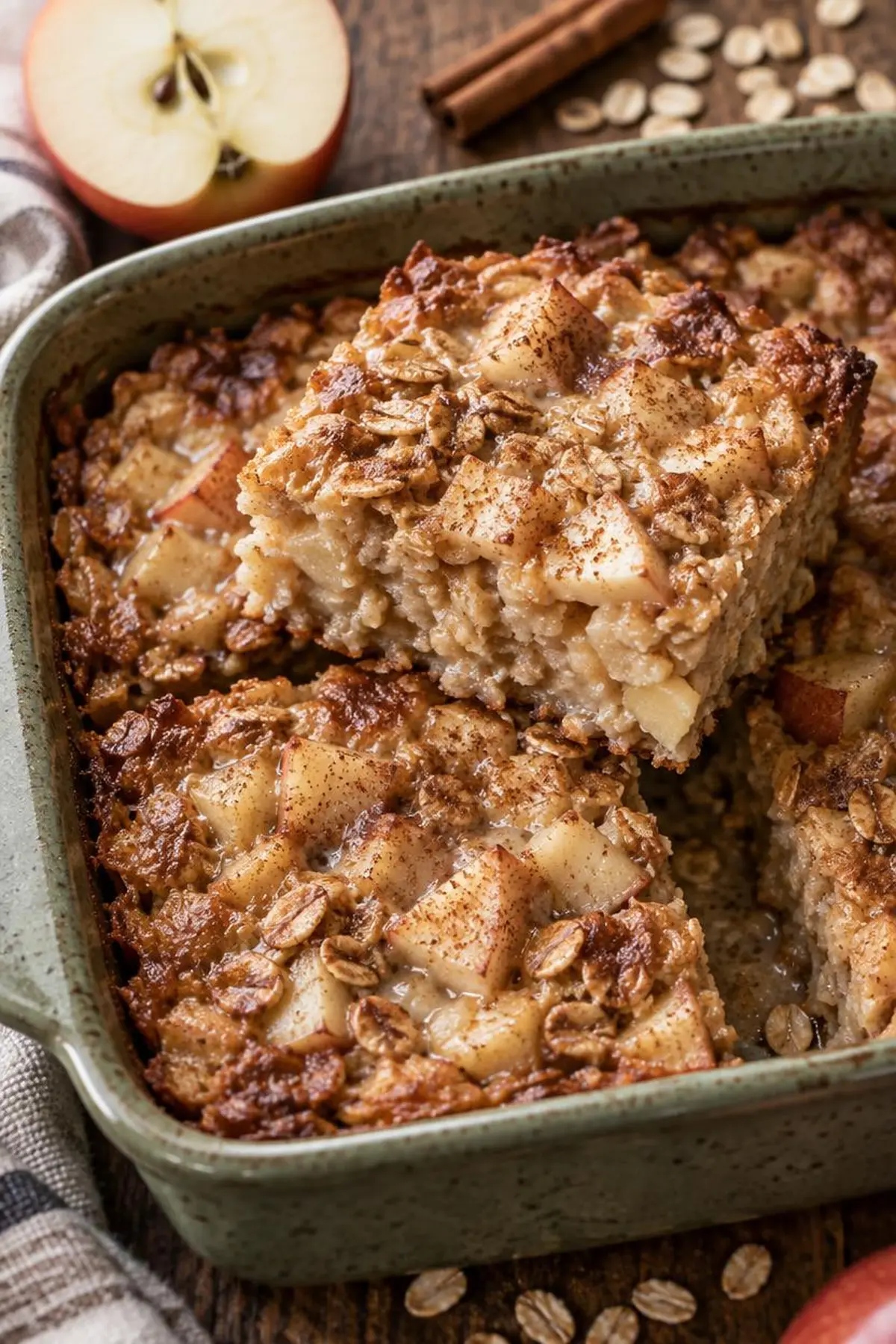
Make it Sunday evening. Cut into six squares Monday morning. The squares are sturdier the next day, which is exactly what you need when breakfast is happening in a car while someone has just announced they've lost one shoe.
*Estimated using USDA FoodData Central

The Swap Snapshot
| Typical Version | The Sugar Swap Version | Sugar per serving* |
|---|---|---|
| Baked oats with brown sugar Brown sugar adds 22g on top of apple's natural sugar — 30g total, 22g added |
Apple Cinnamon Baked Oats with Monk Fruit Apple + monk fruit top-up — 8g total, all natural from apple, milk and yogurt |
30g→8g |
*Estimated using USDA FoodData Central. Not medical advice.
Ingredients
Serves 6 · Keeps 4 days refrigerated
- 180g (2 cups) rolled oats
- 2 medium ⇄ apples (~240g prepared), diced — the primary sweetener swap
- 360ml (1½ cups) 2% milk or unsweetened milk of choice
- 120g (½ cup) plain Greek yogurt
- 1 large egg
- 30g (2 tbsp) ⇄ granulated 1:1 monk fruit baking blend — the brown sugar top-up swap
- 1½ tsp ground cinnamon
- 1 tsp vanilla extract
- 1 tsp baking powder
- 20g (2 tbsp) chia seeds
- Pinch fine sea salt

Instructions
- 1
Heat oven to 180°C / 350°F. Lightly grease a 20cm square baking dish.
- 2
Mix the oats, cinnamon, baking powder, chia seeds, and salt in a large bowl.
- 3
Whisk the milk, yogurt, egg, monk fruit blend, and vanilla in a second bowl.
⇄ Swap NoteThe apple is the main sweetener here — a medium apple contributes around 19g of natural sugar to the whole dish. Monk fruit tops it up without adding any more. Allulose would make the bake too wet and sticky to cut into clean squares. See monk fruit vs allulose for the full comparison.
- 4
Combine the wet and dry ingredients, then fold in the diced apple.
- 5
Pour into the baking dish and bake 32–38 minutes until the centre is set but still slightly soft.
- 6
Rest 10 minutes before slicing. Serve warm or refrigerate for up to 4 days.
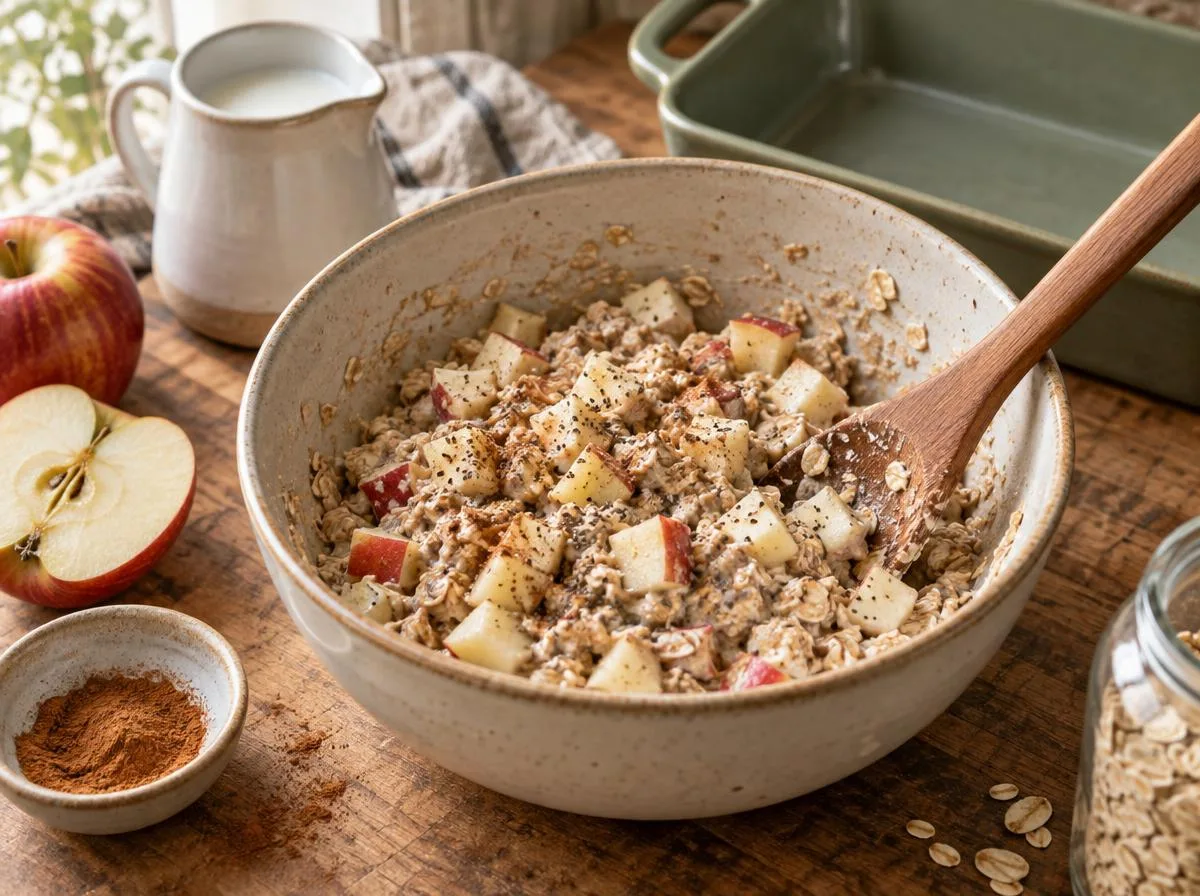
The mixture before baking — oats, diced apple, chia seeds, cinnamon. It should look hearty and thick, not runny.
Why the Apple Does Most of the Work Here
Two medium apples contribute around 19g of natural sugar to this dish before any sweetener is added. Most baked oat recipes call for 60–80g of brown sugar on top of that — effectively doubling the sweetness when the apple has already done plenty. Monk fruit here is a top-up, not a replacement: a small amount to bring the dish to the right sweetness level without adding any more sugar. Allulose, while excellent in the granola bars and cookies, would add moisture and make these too wet to set properly. The Swap Guide has the full rundown on when to use which sweetener.
Common Mistakes
- Underbaking. The centre should be set — not liquid — before you take it out. Press it gently: it should feel firm with a slight give, not jiggly.
- Cutting while warm. Rest for at least 10 minutes. The squares hold together much better once they've had time to firm up.
- Using quick oats instead of rolled oats. Quick oats absorb liquid faster and can make the texture mushy. Rolled oats give better structure and chew.
Storage
Refrigerate in an airtight container for up to 4 days. The squares are sturdier and better for lunchboxes on day 2 onwards. Reheat in the microwave for 60 seconds or eat cold.
Nutrition per serving
*Estimated using USDA FoodData Central · Typical version: 30g sugar · All 8g naturally occurring from apple, milk and yogurt · 0g added sugar · Not medical advice.
Frequently Asked Questions
Which apple variety works best?
A firm eating apple like Gala, Fuji, or Braeburn works well — it softens during baking without turning to mush. Avoid very soft varieties like Golden Delicious, which can become watery.
Can I make this the night before?
Yes — this is the whole point. Assemble, refrigerate unbaked overnight, then bake in the morning. Add 5 minutes to the bake time if going straight from the fridge to the oven.
Can I leave out the chia seeds?
Yes — the chia seeds add fibre and help bind the mixture slightly, but the recipe works without them. The squares may be slightly less firm when cut cold.