
5 No Added Sugar Summer Popsicles — Real Fruit, Real Flavour

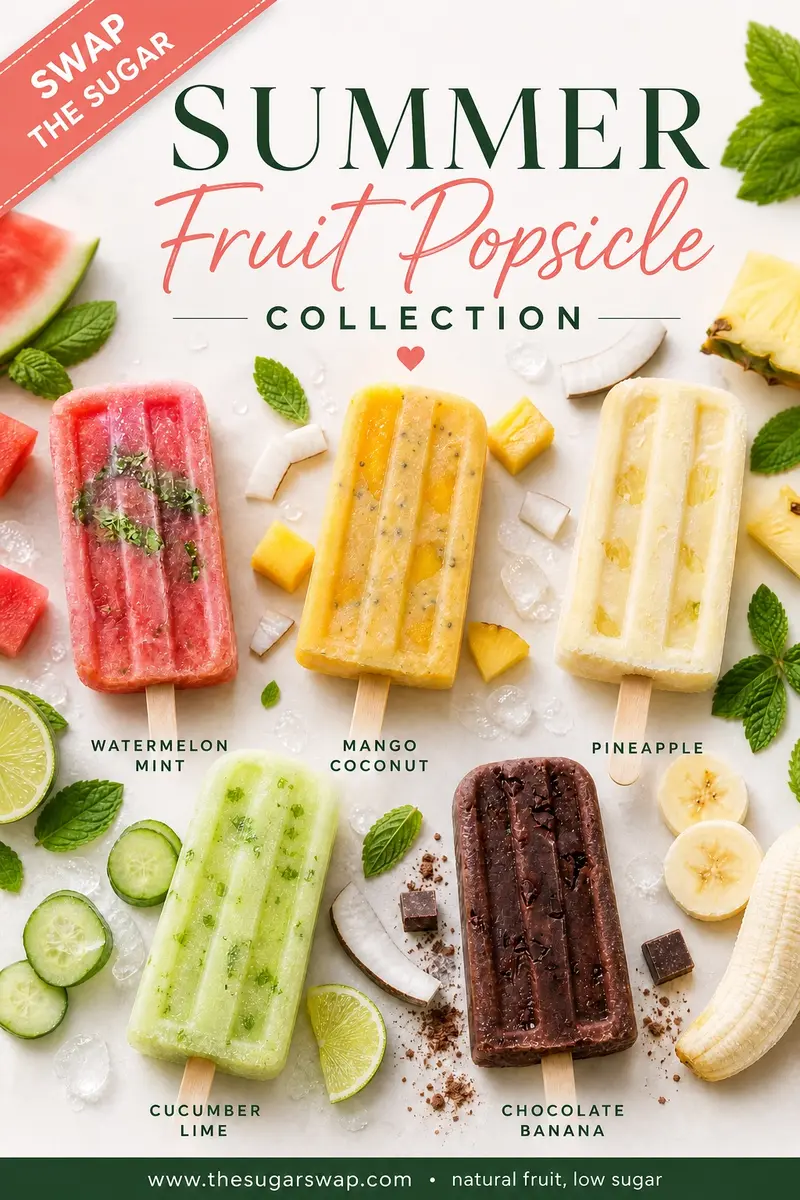
I have a very specific memory of the summer I started reading ice lolly ingredient labels. It was not a pleasant experience. The kind I grew up eating — bright red, watermelon shaped, approximately the size of a small remote control — turned out to be made with about as much actual watermelon as a watermelon-flavoured boiled sweet. Which is to say: symbolic quantities. The main ingredients were water, sugar, and glucose syrup. The watermelon was there in a supporting role, mostly for the branding.
I started making my own. Turns out that popsicles are, structurally, one of the simplest things in existence: blend fruit, pour into a mould, freeze. The whole operation takes about ten minutes and then the freezer does the rest while you get on with your summer.
Here are five I make on rotation — two refreshing, two tropical, one chocolate. None of them have a gram of added sugar they don't need.
"Popsicles are the simplest thing in existence. Ten minutes, then the freezer does the rest while you get on with your summer."
The Five Popsicles
The most surprising one in the collection — cucumber blended with fresh lime and monk fruit produces something genuinely refreshing, much crisper and cleaner than any fruit juice popsicle. The monk fruit does the sweetening. The lime does the zing. The cucumber provides a base with almost no natural sugar at all.
Get the recipe →Three ingredients: ripe watermelon, fresh mint, optional lime. That's the whole recipe. Ripe summer watermelon doesn't need any sweetener — the swap here is simply not adding one. The mint adds a cooling freshness that makes these taste more expensive and intentional than three ingredients have any right to.
Get the recipe →The mango sorbet bar rebuilt from scratch. Fresh ripe mango and unsweetened full-fat coconut milk, blended together. Optional chia seeds for texture. The mango brings intense tropical sweetness. The coconut milk brings genuine creaminess. No sweetened puree, no glucose syrup, no sugar added.
Get the recipe →The pool bar classic, rebuilt. Fresh pineapple plus unsweetened full-fat coconut milk produces the tropical creamy flavour without any cocktail mix, pineapple concentrate, or sweetened coconut cream. Same holiday feeling. No sugar crash at 4pm.
Get the recipe →The emergency chocolate situation, handled. Ripe spotty bananas blended with unsweetened cocoa powder and almond milk, with dark chocolate pieces (70%+ cocoa) folded in. The banana does all the sweetening. The dark chocolate does all the chocolating. The result is genuinely more intense than milk chocolate — because you're tasting actual cocoa rather than cocoa buried under sugar.
Get the recipe →The Sugar Comparison
| Popsicle | Typical added sugar | The Sugar Swap version |
|---|---|---|
| Cucumber Lime Zing | 15g | 2g (natural only) |
| Watermelon Mint Bliss | 20g | 7g (natural only) |
| Tropical Mango Coconut | 25g | 9g (natural only) |
| Piña Colada | 30g | 7g (natural only) |
| Banana Dark Chocolate | 35g | 10g (natural only) |
*Per USDA FoodData Central. Natural fruit sugar is different from added sugar.
The Universal Popsicle Method
All five recipes follow the same structure:
- A real-fruit base — ripe fruit blended smooth, providing natural sweetness and body
- A liquid — water, almond milk, or coconut milk for the right consistency
- A flavour amplifier — lime, mint, cocoa, or vanilla — something that sharpens and intensifies
- Optional monk fruit — only when the fruit isn't ripe enough to do the sweetening on its own
The monk fruit is a backup, not a default. If the fruit is ripe, it doesn't need any help. This is the same logic as the summer fruit salads collection — fruit at peak ripeness is already doing everything you need.
Flavours mellow by about 20% when frozen. Before you pour, taste the mixture and make it slightly bolder — more lime, a touch more monk fruit — than feels right at room temperature. Future-you will find it perfectly balanced once frozen. This applies to every recipe in this collection. It is the most important popsicle tip I know.
About Monk Fruit in Frozen Recipes
Monk fruit works particularly well in frozen applications because it doesn't add any water content (unlike honey or agave) and it maintains its sweetness at freezing temperatures. It's the default sweetener across The Sugar Swap for exactly this reason — it functions like sugar in most applications without the glycemic impact. For the full breakdown of how it works and when to use it, the What is Monk Fruit guide covers everything, and the how to use monk fruit instead of sugar post covers the practical substitution ratios.
If you can't find monk fruit where you are — it's less common in some parts of Europe — granulated stevia is a direct substitute at the same quantities. Both are zero-glycemic sweeteners that work in frozen recipes without affecting texture.