
Best Substitute for Allulose in Baking — What Actually Works

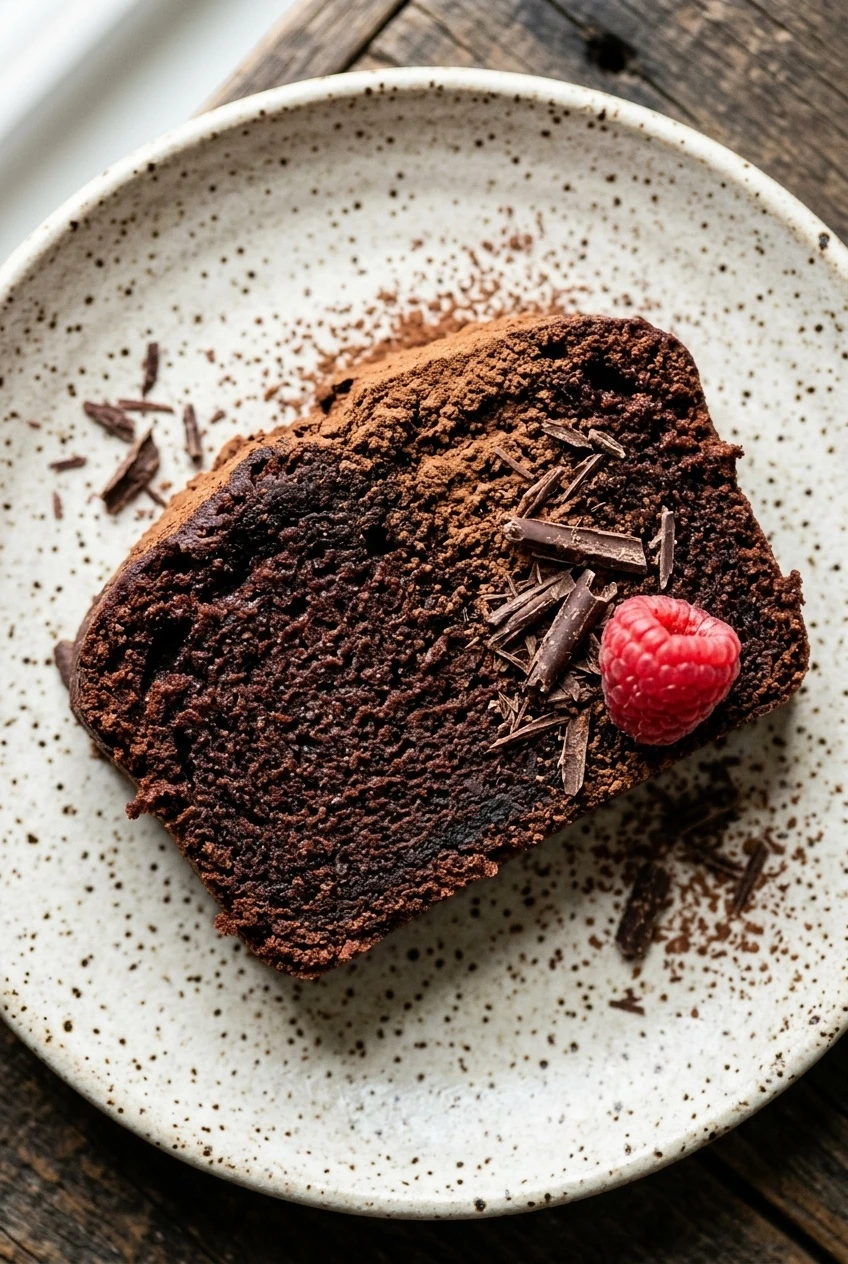
Allulose is genuinely brilliant for baking. It caramelises, it keeps cakes moist for days, it gives brownies that crinkle top. The problem is that in a lot of places — including most of Europe — it is either impossible to find or eye-wateringly expensive. And if you are trying to make a low sugar chocolate pound cake at 7pm on a Tuesday, "order it online and wait a week" is not a helpful answer.
So here is the practical guide to what you can actually use instead of allulose in baking. Not just a list — a proper breakdown of which substitute works for which situation, what the ratio is, and what to expect from the result. Built from real baking experiments, not theory.
"The best substitute for allulose depends entirely on what you're making. There is no single answer — but there is always a right one."
Why Allulose Is Hard to Replace
Before the substitutes, it helps to understand what makes allulose special — because that tells you what you are actually trying to replicate.
Allulose does three things that most sweeteners don't:
- It caramelises. Most zero-calorie sweeteners don't brown in the oven. Allulose does — giving you that golden crust and deep colour that makes baked goods look and taste right.
- It retains moisture. Allulose is hygroscopic, meaning it pulls moisture from the air and keeps it in the bake. Cakes stay soft for days instead of drying out overnight.
- It has no cooling effect. Erythritol and xylitol leave a cool, almost minty sensation on the tongue — particularly noticeable in no-bake recipes. Allulose doesn't.
When you're choosing a substitute, you're looking for whichever of these three properties matters most for your recipe. A brownie needs the moisture retention and caramelisation. A cheesecake filling mostly needs sweetness and no cooling effect. A sauce just needs sweetness. Different jobs, different tools.
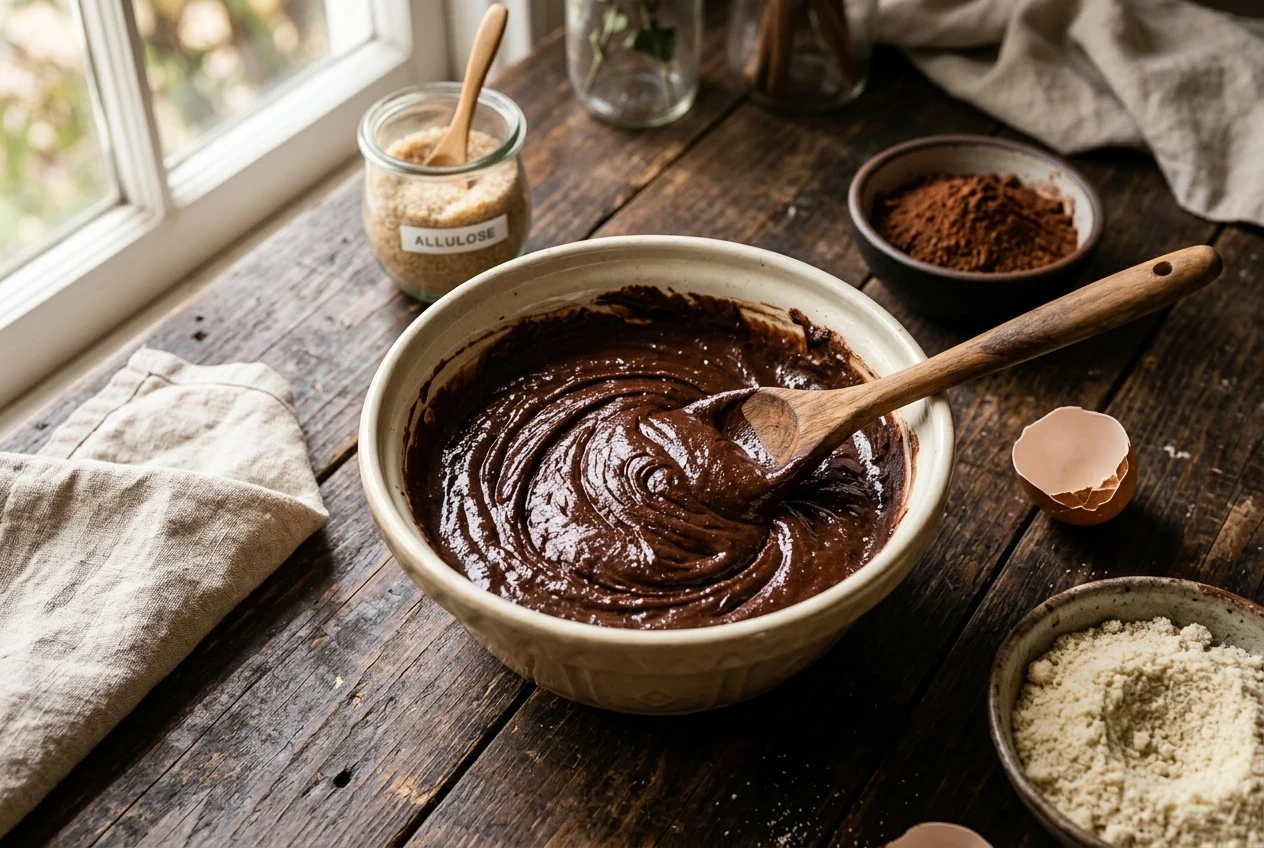
The batter for the Low Sugar Chocolate Pound Cake — made with monk fruit instead of allulose. Same consistency, same result.
The Best Substitutes for Allulose — By Situation
Best for: Cakes, muffins, cheesecakes, sauces, drinks — almost everything.
Monk fruit is our default sweetener at The Sugar Swap and the closest thing to a universal allulose substitute. It has zero glycaemic impact, no aftertaste, and dissolves cleanly into batters and fillings. The one thing it doesn't do is caramelise — so for recipes where browning matters (BBQ sauce, brownies, caramel), you'll want to combine it with a small amount of something else.
It is also significantly sweeter than allulose, so you use less. This changes the volume of dry ingredients slightly — compensate by adding an extra tablespoon of almond flour per cup of sweetener replaced.
Best for: Cookies, crumbles, dry rubs, anything with strong competing flavours.
Erythritol is structurally closer to allulose than monk fruit is — it's a sugar alcohol rather than a fruit extract, and it does caramelise slightly in the oven. The main drawback is the cooling aftertaste, which is most noticeable in cold or room-temperature preparations like cheesecake filling or frosting. In a warm cookie straight from the oven, you won't notice it.
If you can find a monk fruit-erythritol blend (many brands sell these), that combination gives you the clean sweetness of monk fruit plus the browning properties of erythritol. It's the closest thing to allulose in practical terms.
Best for: Brownies, energy balls, no-bake bars, dense baked goods.
Dates do contain natural sugar — about 17g per date — but they also come with fibre, which slows the sugar absorption significantly. The glycaemic impact is much lower than refined sugar. More importantly, puréed Medjool dates bring extraordinary moisture and a deep caramel flavour that works beautifully in brownies and chocolate recipes. They also bind no-bake recipes without any added sweetener.
Not suitable for light, delicate bakes like lemon cake or vanilla cheesecake — the flavour is too strong. But for chocolate? Remarkable.
Best for: When you want the browning and caramelisation of allulose and don't need zero sugar — just less sugar.
Coconut sugar has a lower glycaemic index than regular sugar — around 35 compared to white sugar's 65 — and it caramelises beautifully. It brings a slight molasses depth that works well in spiced bakes, chocolate recipes, and anything where a more complex sweetness is welcome.
It's not a zero-sugar option — it's a lower-sugar option. If you're making something for someone managing blood sugar carefully, this is not the right choice. If you're simply reducing added sugar and can't find allulose, it's a solid practical substitute.
Quick Comparison — At a Glance
| Substitute | Caramelises | No Cooling Effect | Zero Sugar | Best For |
|---|---|---|---|---|
| Monk Fruit | ✗ | ✓ | ✓ | Almost everything |
| Erythritol | ~ | ✗ | ✓ | Cookies, crumbles |
| Monk Fruit + Erythritol blend | ✓ | ✓ | ✓ | Closest to allulose |
| Date Purée | ✓ | ✓ | ✗ | Brownies, bars |
| Coconut Sugar | ✓ | ✓ | ✗ | Lower-sugar baking |
What I Actually Use — And Why
On this site, monk fruit is the default across almost every recipe. It's the most accessible, the cleanest tasting, and it works in the widest range of applications. For the Low Sugar Chocolate Pound Cake shown here, monk fruit produces an almost identical result to allulose — the texture is slightly different (a little less sticky, a little more firm) but the flavour and the crumb are both excellent.
For the Low Sugar Zucchini Brownies, I specifically use allulose when I can find it — because the crinkle top and the fudgy interior genuinely depend on how allulose behaves in the oven. When I can't, a monk fruit-erythritol blend is the next best thing.
For the Low Sugar Raspberry Cheesecake, monk fruit alone is perfect — the filling doesn't need caramelisation, just clean sweetness and no cooling effect. Allulose makes no meaningful difference here.
If your recipe is baked at high heat and you want browning — use a monk fruit-erythritol blend or coconut sugar. If it's a filling, sauce, drink, or no-bake recipe — monk fruit alone is perfect. If it's a fudgy brownie and you want the exact crinkle top — try to find the allulose, or accept a slightly different (still delicious) result.
Where to Find Allulose — If You Still Want It
Allulose is approved and widely available in the United States, Canada, and parts of Asia. In Europe, it has not yet received approval from the European Food Safety Authority, which means it is legally restricted in most EU countries. This is why so many European bakers are searching for substitutes — it's not that they don't want it, it's that they genuinely can't buy it.
If you're outside Europe, look for it in health food stores, specialist baking retailers, or online. In the US, Anthony's Goods and Wholesome are reliable brands. In the UK and some European countries, it occasionally appears in specialist import shops but availability is inconsistent.
Until it has wider regulatory approval in Europe, monk fruit remains the best practical substitute — which is exactly why it's the default sweetener across every recipe on this site.