
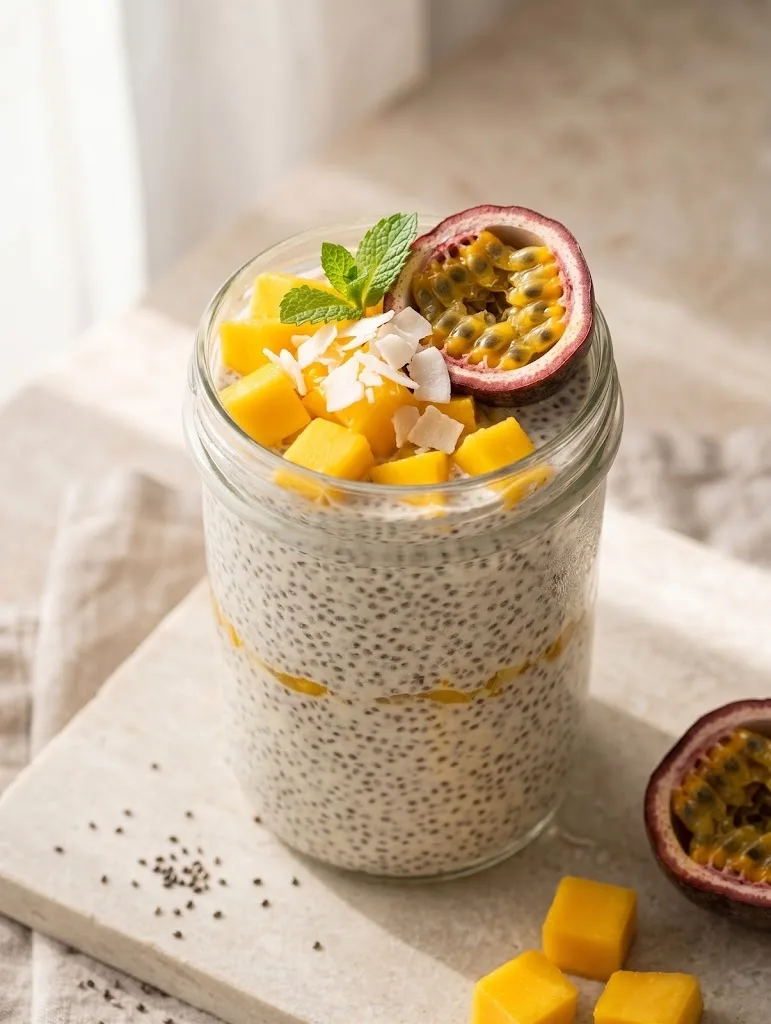
Tropical Chia Pudding
My breakfast used to be a ‘fruit on the bottom’ yogurt cup. I had convinced myself it was healthy — it had the word ‘fruit’ in the name, it had a vaguely cheerful lid, it was in the dairy section. I looked at the nutrition label eventually and felt genuinely betrayed. More sugar than a candy bar. Before 8am.
Chia pudding was the swap I resisted for longer than I should have. It sounded worthy in an unappealing way. It isn’t. It’s thick, creamy, coconutty, and topped with fresh mango that provides all the fruit sweetness that the yogurt cup was pretending to have. My body was significantly more appreciative of this version.
The key is the second stir. After the initial mixing, the chia seeds begin to gel and can form clumps. Wait ten minutes, then stir again thoroughly — breaking up any clumps that have formed. This is what gives you a smooth, pudding-like consistency rather than a lumpy gel.
*Per USDA FoodData Central

The Swap Snapshot
| Typical Version | The Sugar Swap Version | Sugar per serving* |
|---|---|---|
| Fruit Yogurt Cup Store-bought fruit yogurt — sugar often second ingredient, up to 26g per cup |
Tropical Chia Pudding Chia seeds, unsweetened coconut milk, fresh mango — naturally sweet |
26g→8g |
*Based on USDA FoodData Central values. The Sugar Swap is not medical or nutritional advice.
Ingredients
Serves 1 · Scale as needed
- 3 tbsp ⇄ chia seeds ⇄ the base swap
- 1 cup ⇄ unsweetened coconut milk (carton) ⇄ the liquid swap
- ¼ cup fresh mango, diced
- ½ tsp vanilla extract

Instructions
-
1
In a jar or container, whisk together chia seeds, coconut milk, and vanilla extract.
-
2
Wait 10 minutes, then whisk again vigorously to break up any clumps that have formed.
⇄ Swap NoteThis second stir is the technique swap here. Without any sugar or thickeners, the chia seeds need to be evenly distributed to gel properly. Break up all the clumps — a smooth pudding is the goal.
-
3
Cover and refrigerate for at least 4 hours or overnight until thick and pudding-like.
-
4
Top with fresh diced mango just before eating.
Why I Made This Swap
Store-bought fruit yogurts are one of the most sugar-dense foods marketed as healthy — often containing 25–30g of sugar per cup from added sugar, fruit concentrate, and sweeteners. Chia seeds in unsweetened coconut milk provide 11g of fibre, healthy omega-3 fatty acids, and significant calcium — with the only sugars coming from the fresh mango. Chia seeds are one of the most nutrient-dense foods per gram available.
Common Mistakes
- Using canned coconut milk instead of carton. Canned coconut milk is much higher in fat and makes the pudding extremely heavy. The carton variety (drinking coconut milk) gives the right consistency.
- Skipping the second stir. The chia seeds clump if left unstirred after the initial mixing. The second stir at 10 minutes is essential for a smooth result.
- Using ‘original’ coconut milk which contains added sugar. Always check the label for ‘unsweetened’. Many coconut milks have added sugar — check before buying.
Storage
Chia pudding keeps in the fridge for up to 5 days — making it perfect for weekly meal prep. Make 5 jars on Sunday and breakfast is sorted. Add the fresh mango each morning.
Nutrition per serving
*Per USDA FoodData Central · Typical version: 26g sugar · The Sugar Swap is not medical or nutritional advice.
Frequently Asked Questions
Can I use almond milk instead of coconut milk?
Yes — any unsweetened plant milk works. Coconut gives the richest, most tropical result but oat milk, almond, or cashew all work well.
Is the pudding supposed to be thick?
Yes — properly set chia pudding should have a thick, spoonable consistency. If it’s too thin, add another tablespoon of chia seeds and refrigerate for another hour.
Can I use frozen mango?
Yes — let it thaw in the fridge overnight and add in the morning. Drain any excess liquid before topping.
