
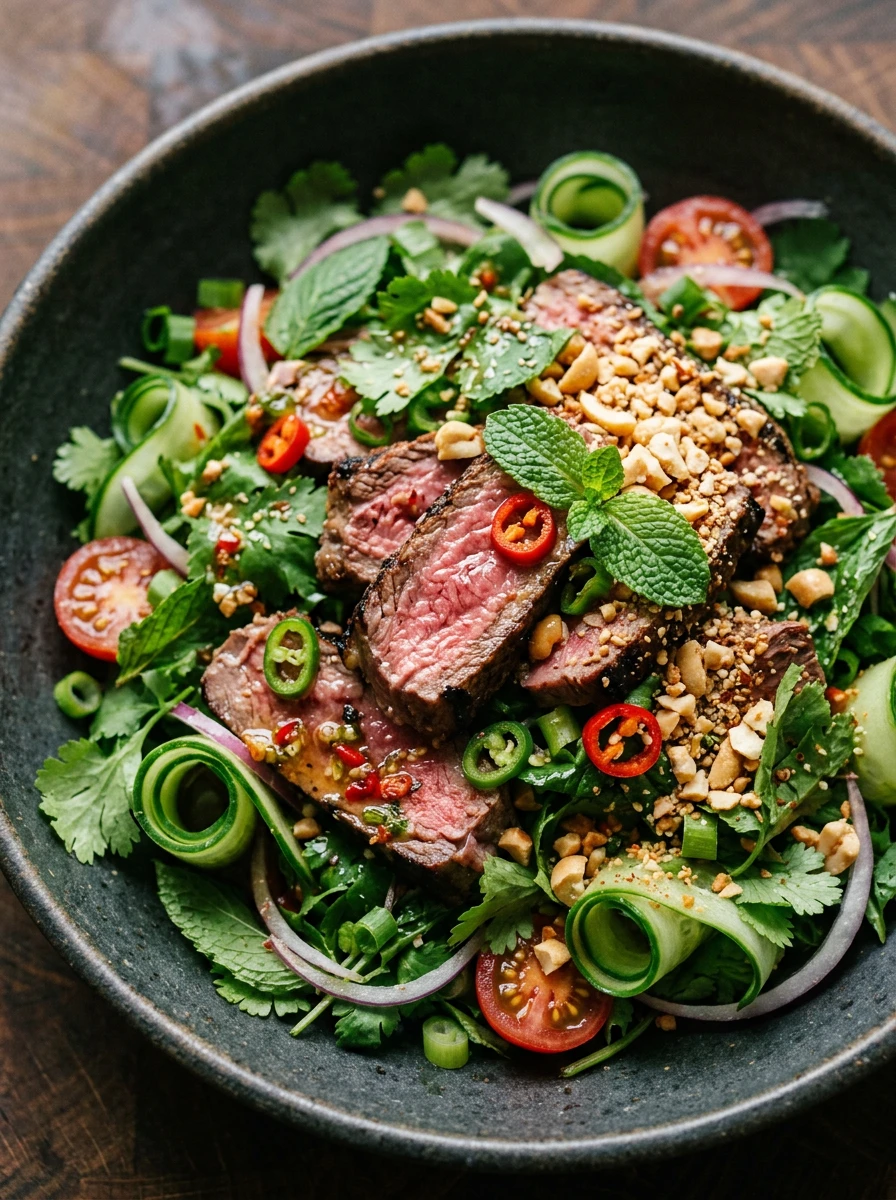
Thai Steak Salad
I ordered this at a Thai restaurant once and spent the entire walk home wondering why I had never made it myself. It’s grilled beef, fresh herbs, cucumber, chilli, lime — the kind of lunch that feels like it took three hours to make and actually takes thirty minutes.
The original recipe uses palm sugar in the dressing, which is where the sugar sneaks in. The swap to monk fruit is seamless — the dressing still has that balance of salty, sour, and sweet that makes Thai food so completely satisfying. You won’t miss the palm sugar. I promise you won’t even notice it’s gone.
Use the best steak you can manage here. Sirloin or rib-eye works beautifully, but even a decent supermarket cut will do well if you don’t overcook it. Slice it thin, rest it properly, and the rest of this salad does all the work.
*Per USDA FoodData Central

The Swap Snapshot
| Typical Version | The Sugar Swap Version | Sugar per serving* |
|---|---|---|
| Classic Thai Beef Salad (Yum Nua) Palm sugar, fish sauce, lime — standard dressing has 3–4 tsp sugar per serving |
Thai Steak Salad with Monk Fruit Monk fruit granules replace palm sugar 1:1 — same balance, no added sugar |
18g→3g |
*Based on USDA FoodData Central values. The Sugar Swap is not medical or nutritional advice.
Ingredients
Serves 4 · Scale as needed
- 340g (¾ lb) sirloin or rib-eye steak
- 1 tbsp soy sauce or tamari
- 2 small cucumbers, thinly sliced
- 200g cherry tomatoes, halved
- 1 shallot, thinly sliced
- ¼ cup fresh mint, torn
- ¼ cup fresh coriander, torn
- 2 tbsp crushed peanuts, to serve
- 1 tsp sesame seeds, to serve
- Dressing
- 1½ tbsp fish sauce
- 2 tbsp ⇄ monk fruit granules ⇄ the sweetener swap
- 2 tbsp fresh lime juice (about 1 lime)
- 1 fresh red chilli, finely minced

Instructions
-
1
Season the steak with soy sauce and a few grinds of black pepper. Let it rest at room temperature for 15 minutes while you prep everything else.
-
2
Whisk together the fish sauce, monk fruit granules, lime juice, and minced chilli until the monk fruit dissolves fully. Taste — it should be sharp, salty, and just gently sweet. Adjust lime or monk fruit as needed.
⇄ Swap NoteMonk fruit is about 150–200 times sweeter than sugar, but granulated monk fruit blends are formulated to be a 1:1 swap. Start with the amount listed, then taste — a little goes further than you’d expect. It dissolves completely in the dressing with no aftertaste.
-
3
Heat a griddle pan or heavy frying pan until very hot. Cook the steak for 3–4 minutes each side for medium-rare. Rest for 5 minutes, then slice thinly against the grain.
-
4
Arrange cucumber, tomatoes, and shallot on a large plate or bowl. Add the sliced steak and fresh herbs. Drizzle over the dressing, starting with half and adding more to taste.
-
5
Scatter over crushed peanuts and sesame seeds. Serve immediately — this salad waits for no one.
Why I Made This Swap
Palm sugar is used across Southeast Asian cooking for its complex, caramel-like sweetness — but it still contributes significant sugar to the dressing. By swapping to monk fruit granules, you keep every bit of that sweet-sour-salty balance while bringing the sugar content down from 18g to around 3g per serving. The fresh ingredients — lime, fish sauce, chilli, herbs — do all the flavour work. The monk fruit just balances it without adding sugar.
Common Mistakes
- Overcooking the steak. This salad needs medium-rare beef — pink in the middle, tender. Well-done steak in a Thai salad is a sad thing. Use a hot pan, don’t crowd it, and rest it properly before slicing.
- Dressing the salad too early. This goes on right before serving. The cucumber and tomatoes will release water and dilute your dressing if you dress it in advance. Toss it at the table.
- Skipping the rest. Five minutes of resting the steak makes an enormous difference to how juicy it slices. Set a timer and step away from the knife.
Storage
Store the steak and salad separately from the dressing in the fridge for up to 2 days. Dress only just before eating. The dressing keeps in a sealed jar for up to 5 days.
Nutrition per serving
*Per USDA FoodData Central · Typical version: 18g sugar · The Sugar Swap is not medical or nutritional advice.
Frequently Asked Questions
Can I use a different cut of beef?
Yes — sirloin, rib-eye, or fillet all work well. The key is a quick-cooking, tender cut that can be eaten medium-rare. Avoid slow-cook cuts like brisket or chuck for this salad.
Is monk fruit suitable for people avoiding sugar alcohols?
Pure monk fruit extract contains no sugar alcohols. However, many granulated monk fruit blends are mixed with erythritol (a sugar alcohol) as a bulking agent. Check the label if this matters to you — or see our full sweetener guide for brands that use monk fruit with allulose instead.
Can I make this salad with chicken instead?
Absolutely — grilled chicken thighs work beautifully with the same dressing. Slice them the same way after resting. Also try our Grilled Chicken Salad with Avocado for another high-protein lunch option.
