
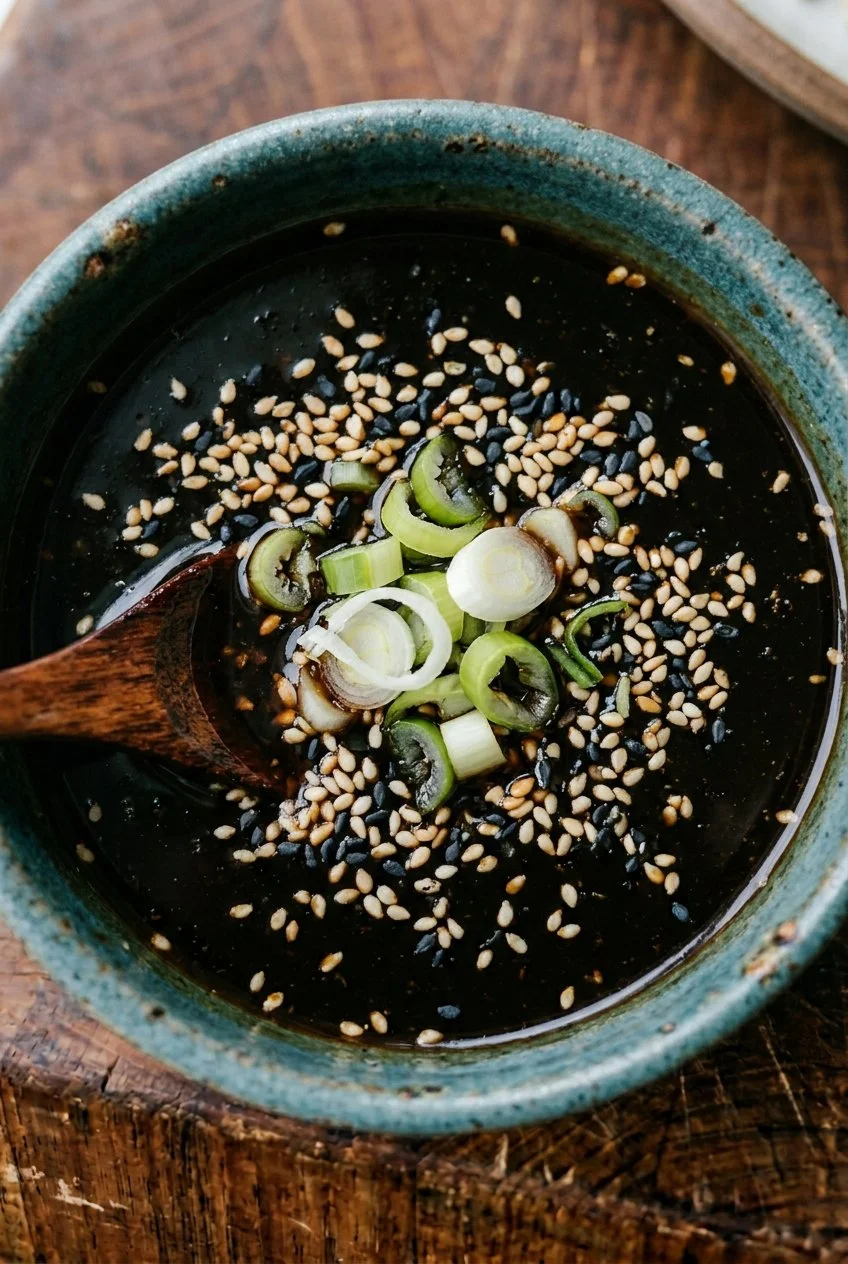
Sugar-Free Teriyaki Sauce — The Stir-Fry Swap
Teriyaki sauce was one of my biggest surprises when I started reading labels. That glossy, sticky coating on your chicken? Twelve grams of sugar per two tablespoons. I was putting it on everything and wondering why I felt terrible by 4pm.
This version has all the sticky, savoury-sweet character of classic teriyaki — the gloss, the depth from the ginger and garlic, the umami from tamari. What it doesn't have is any of the sugar that makes your energy crash halfway through the afternoon.
Five minutes from start to finish. This one lives in my fridge permanently now.
*Per USDA FoodData Central

The Swap Snapshot
| Typical Version | The Sugar Swap Version | Sugar per 2 tbsp* |
|---|---|---|
| Classic Teriyaki Sauce Brown sugar, honey, sweet mirin — hidden sugar in every stir-fry |
Sugar-Free Teriyaki Sauce Tamari, ginger, garlic, liquid monk fruit |
12g→1g |
*Based on USDA FoodData Central values. The Sugar Swap is not medical or nutritional advice.
Ingredients
Makes about 1 cup · 8 servings (2 tbsp each)
- ½ cup tamari (or soy sauce)
- ¼ cup water
- 2 tbsp rice vinegar (unsweetened)
- 1 tsp ⇄ liquid monk fruit — the sweetener swap
- 1 tsp fresh ginger, grated
- 1 clove garlic, minced
- ½ tsp xanthan gum (to thicken)

Instructions
- 1
In a small saucepan, combine tamari, water, rice vinegar, monk fruit, ginger, and garlic.
- 2
Bring to a simmer over medium heat, stirring to combine.
- 3
Slowly whisk in the xanthan gum a little at a time to thicken the glaze.
⇄ Swap NoteXanthan gum replaces cornstarch (which adds carbs) and sugar (which adds sweetness) as the thickener. Add it slowly and whisk continuously — it thickens fast.
- 4
Simmer for 2–3 minutes until it reaches a sticky, glossy consistency. Use immediately over salmon, chicken, or stir-fry.
Swapping Mirin and Honey for a Clean Glaze
Traditional teriyaki gets its sweetness from a combination of mirin (sweet rice wine), honey, and brown sugar — all significant sources of added sugar. The flavour, though, actually comes from the combination of soy, ginger, garlic, and the caramelisation that happens when the sauce hits the heat. Monk fruit provides the subtle sweetness without any glycaemic impact, and xanthan gum creates that coating texture that makes teriyaki so satisfying. See our Hidden Sugar in Your Favourite Sauces post for more on why sauces are often the biggest hidden source of added sugar.
Common Mistakes
- Adding too much xanthan gum. Half a teaspoon is plenty. Too much and the texture becomes gluey rather than glossy.
- Using regular soy sauce instead of tamari. Both work, but tamari has a richer, less salty flavour that suits this glaze better. It's also gluten-free.
- Making it too far ahead. This sauce is best fresh or within 24 hours — the xanthan gum can continue to thicken in the fridge. Thin with a splash of water if needed.
Storage
Store in a sealed jar in the fridge for up to 5 days. It may thicken further — just whisk in a teaspoon of water to loosen. Not recommended for freezing as the texture changes.
Nutrition per serving (2 tbsp)
*Per USDA FoodData Central · Typical version: 12g sugar per 2 tbsp · The Sugar Swap is not medical or nutritional advice.
Frequently Asked Questions
Can I use granulated monk fruit instead of liquid?
Yes — use 2 tbsp of granulated monk fruit and dissolve it in the sauce as it simmers. Liquid monk fruit is just more convenient here since no heating is required to dissolve it.
What's the best way to use this as a marinade?
Skip the xanthan gum if you're using it as a marinade — you want it thinner for better penetration. Add the xanthan gum only when you're reducing it as a glaze.
Can I pair this with the teriyaki chicken recipe?
Absolutely — check out the Low Sugar Teriyaki Chicken recipe which uses this exact glaze.
