
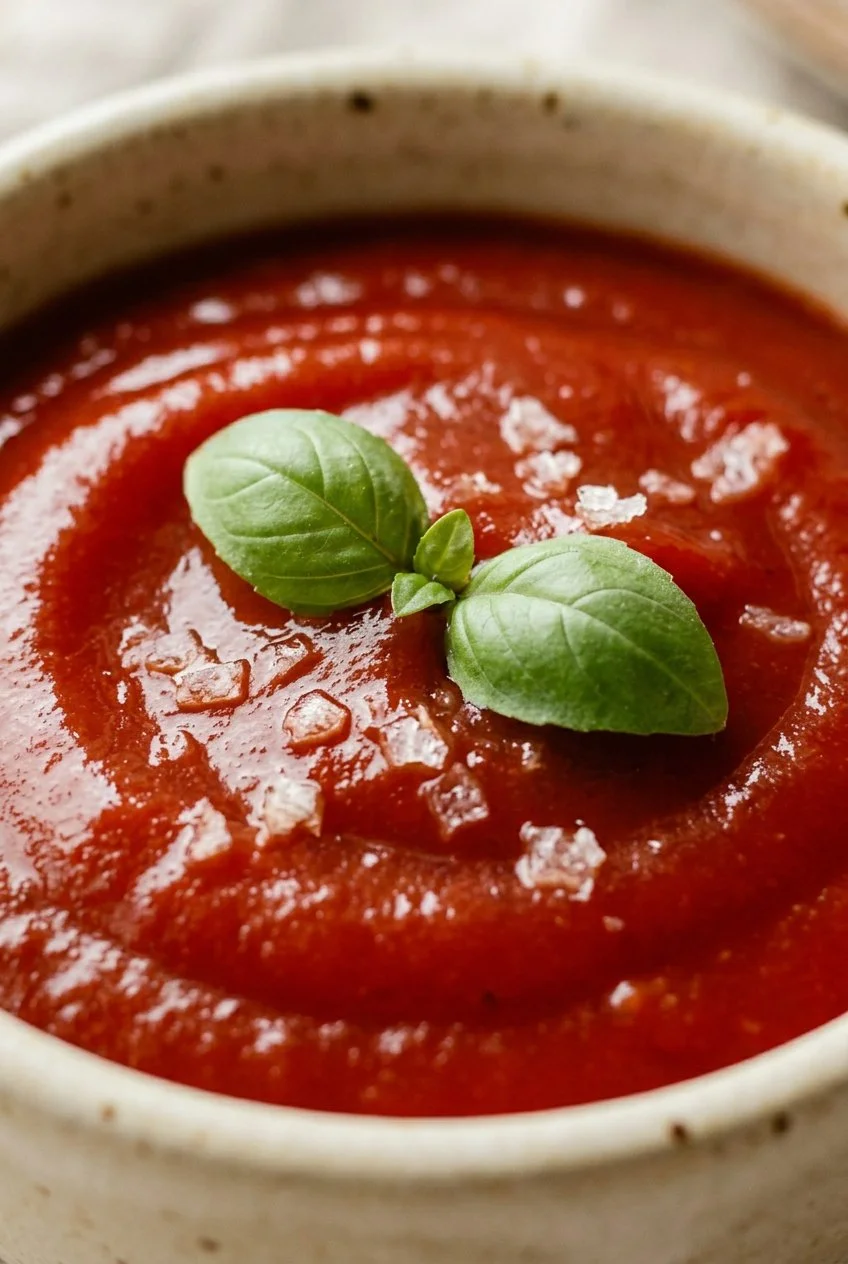
Sugar-Free Ketchup — The Pantry Swap
I used to think ketchup was basically tomatoes. A squeeze here, a squeeze there — hardly counts, right? Then I turned the bottle around. Four grams of sugar. Per tablespoon. I was putting it on everything.
This version tastes like the real thing — properly tangy, properly tomato-forward, with that little kick at the back that makes ketchup ketchup. The monk fruit disappears completely into the background. You genuinely cannot tell.
Five minutes. One bowl. No cooking required. It keeps in the fridge for two weeks and goes on absolutely everything. This is the swap that lives permanently on my condiment shelf.
*Per USDA FoodData Central

The Swap Snapshot
| Typical Version | The Sugar Swap Version | Sugar per tbsp* |
|---|---|---|
| Standard Bottled Ketchup High-fructose corn syrup, refined sugar — in every squeeze |
Sugar-Free Ketchup Tomato paste, apple cider vinegar, monk fruit |
4g→0g |
*Based on USDA FoodData Central values. The Sugar Swap is not medical or nutritional advice.
Ingredients
Makes about 1 cup · 16 servings (1 tbsp each)
- 1 can (170g / 6 oz) tomato paste
- ½ cup apple cider vinegar
- ¼ cup water
- 1 tbsp ⇄ monk fruit granulated — the sweetener swap
- 1 tsp sea salt
- ½ tsp onion powder
- ¼ tsp garlic powder
- ⅛ tsp ground cloves (optional, for depth)

Instructions
- 1
In a medium bowl, whisk together the tomato paste, apple cider vinegar, and water until completely smooth.
- 2
Stir in the monk fruit, sea salt, onion powder, garlic powder, and cloves if using.
⇄ Swap NoteMonk fruit dissolves easily here — no cooking required. Start with 1 tbsp and taste before adding more. It's sweeter than sugar so a little goes a long way.
- 3
Taste and adjust — more vinegar for tang, more monk fruit for sweetness, more salt to balance.
- 4
Transfer to a glass jar and refrigerate for at least 2 hours before serving to let the flavours meld. It gets better overnight.
Why Bottled Ketchup is a Sugar Trap
Standard ketchup contains 4g of sugar per tablespoon — and the reality is most people use two or three tablespoons at a time. That adds up quickly. Most of that sugar comes from high-fructose corn syrup, which is metabolised differently from regular sugar. This version gets its body from concentrated tomato paste, its tang from apple cider vinegar, and its subtle sweetness from monk fruit — which has zero glycaemic impact. Check the Swap Guide for more on why monk fruit is our go-to sweetener for condiments.
Common Mistakes
- Using it straight away. The flavour genuinely needs time to develop. Two hours minimum, overnight is better.
- Skipping the cloves. It's just a pinch but it adds that background warmth that makes this taste like proper ketchup rather than tomato paste in a jar.
- Over-sweetening. Taste as you go. Monk fruit is significantly sweeter than sugar — you need less than you think.
Storage
Store in a sealed glass jar in the fridge for up to 2 weeks. Give it a quick stir before using if it's been sitting. It does not freeze well — but it's so quick to make there's really no need.
Nutrition per serving (1 tbsp)
*Per USDA FoodData Central · Typical version: 4g sugar per tbsp · The Sugar Swap is not medical or nutritional advice.
Frequently Asked Questions
Can I use fresh tomatoes instead of tomato paste?
Tomato paste is much more concentrated and gives you that thick, glossy ketchup texture. Fresh tomatoes would need to be cooked down for a long time and the result would be thinner. Paste is the right call here.
What can I use instead of monk fruit?
A few drops of liquid stevia work well. Check the Swap Guide for a full breakdown of sweetener options and how they compare.
Does it taste like real ketchup?
Genuinely yes — especially after the flavours have had time to rest. The monk fruit doesn't leave any aftertaste and the tomato-vinegar balance is spot on.
