
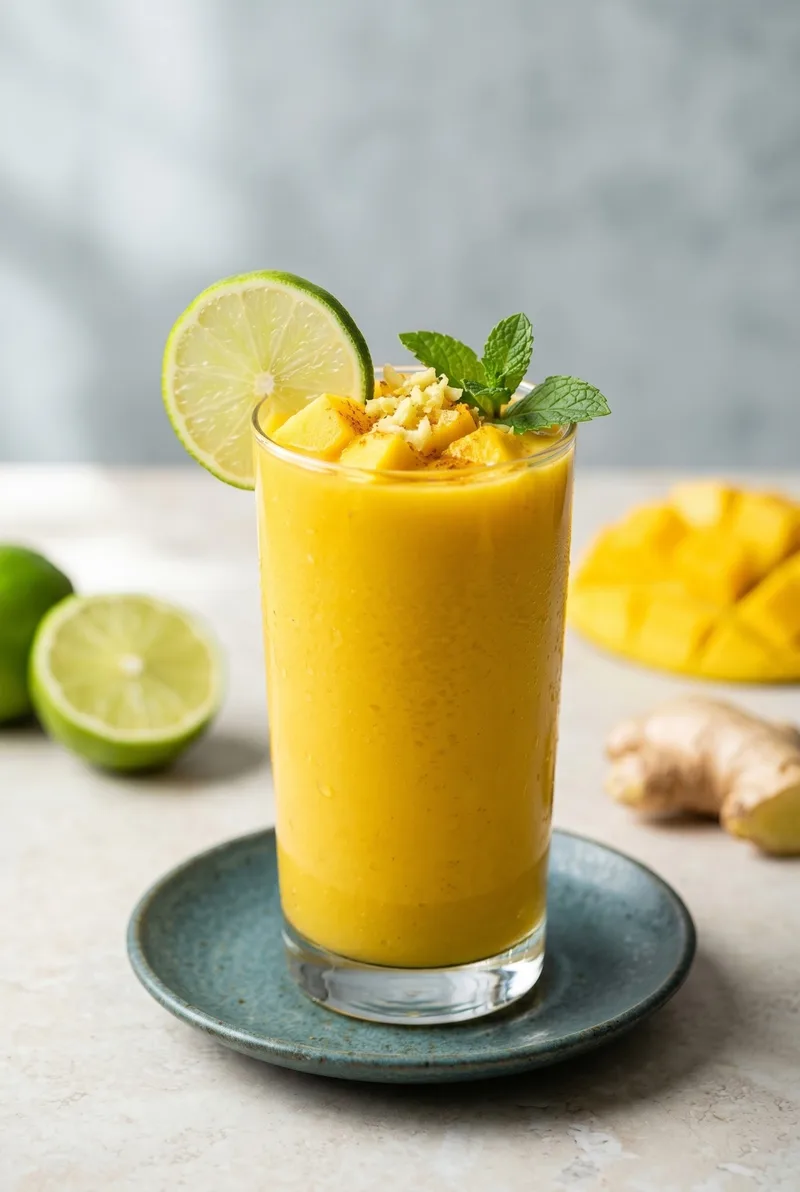
Tropical Mango Coconut Smoothie
I used to buy tropical smoothies without reading the label because I assumed tropical meant fruit, which meant natural, which meant fine. I was incorrect on every level. The juice base, the mango concentrate, and the added sugar turned a ‘fruit smoothie’ into something with the sugar content of a dessert.
The secret in this recipe is frozen cauliflower. I know. Stay with me. Blended from frozen into coconut milk and mango, it is completely invisible — no taste, no texture clue, nothing. What it adds is volume, fibre, and a creaminess that makes the smoothie thick and satisfying without any extra sugar. My body is significantly happier not knowing it’s there.
Use frozen mango rather than fresh — it gives a much thicker, colder, more satisfying texture. And buy the florets, not the riced cauliflower, for this. Freeze them in batches so you always have them ready for smoothies, no prep required.
*Per USDA FoodData Central

The Swap Snapshot
| Typical Version | The Sugar Swap Version | Sugar per serving* |
|---|---|---|
| Commercial Tropical Smoothie Mango juice base, fruit concentrate, added sugar — 25–30g typical |
Mango Coconut with Secret Volume Boost Frozen mango, coconut milk, frozen cauliflower (secret!), lime, ginger |
26g→9g |
*Based on USDA FoodData Central values. The Sugar Swap is not medical or nutritional advice.
Ingredients
Serves 1 · Scale as needed
- ½ cup canned coconut milk + ½ cup water ⇄ for creaminess without extra sugar
- ½ cup frozen mango chunks
- ½ cup frozen cauliflower florets ⇄ the invisible fibre swap
- juice of ½ lime
- pinch fresh grated ginger (optional)
- stevia or allulose to taste, if needed (optional)

Instructions
- 1
Add coconut milk, water, frozen mango, frozen cauliflower, lime juice, and ginger to the blender. Blend on high until completely smooth.
⇄ Swap NoteThe frozen cauliflower blends invisibly into the mango — it adds fibre, creaminess, and volume without any flavour or texture trace. This is the swap that does the most invisible heavy lifting.
- 2
Taste for sweetness. If the mango was not very ripe, a drop of stevia or a teaspoon of allulose brings it up without adding sugar.
- 3
Pour and drink straight away — the colder the better.
Why I Made This Swap
Commercial tropical smoothies use mango juice concentrate as a base, delivering 25–30g of sugar before any other ingredient. Swapping the juice base for coconut milk and water and extending volume with frozen cauliflower cuts the sugar by two-thirds while adding meaningful fibre, vitamin C, and B vitamins. The mango contributes vitamins A and C alongside natural sugars — but at a controlled portion that doesn’t spike blood sugar the way a juice base does.
Common Mistakes
- Using mango juice instead of frozen mango. Juice removes all the fibre and concentrates the sugar. Frozen mango is the correct form here — the fibre matrix slows sugar absorption.
- Using raw cauliflower. Frozen cauliflower blends invisibly. Raw cauliflower can leave a slightly raw vegetable taste. Always use it from frozen.
- Using sweetened coconut milk carton. Check the label — you want unsweetened. Some coconut milk drinks have significant added sugar.
Storage
Drink immediately for best texture and temperature. Smoothies don’t store well. Pre-pack frozen mango and cauliflower in individual bags to make the morning blend effortless.
Nutrition per serving
*Per USDA FoodData Central · Typical version: 26g sugar · The Sugar Swap is not medical or nutritional advice.
Frequently Asked Questions
Will anyone really not taste the cauliflower?
Genuinely — no. The mango, coconut, and lime completely dominate. This has been tested on many willing and unwilling subjects. The cauliflower is invisible.
Can I use fresh mango?
Yes — add a handful of ice cubes for the right consistency. Frozen gives a thicker, more satisfying result.
Can I use light coconut milk?
Yes — it gives a slightly thinner smoothie. Full-fat is more satisfying but light works if you prefer a lower calorie option.
