
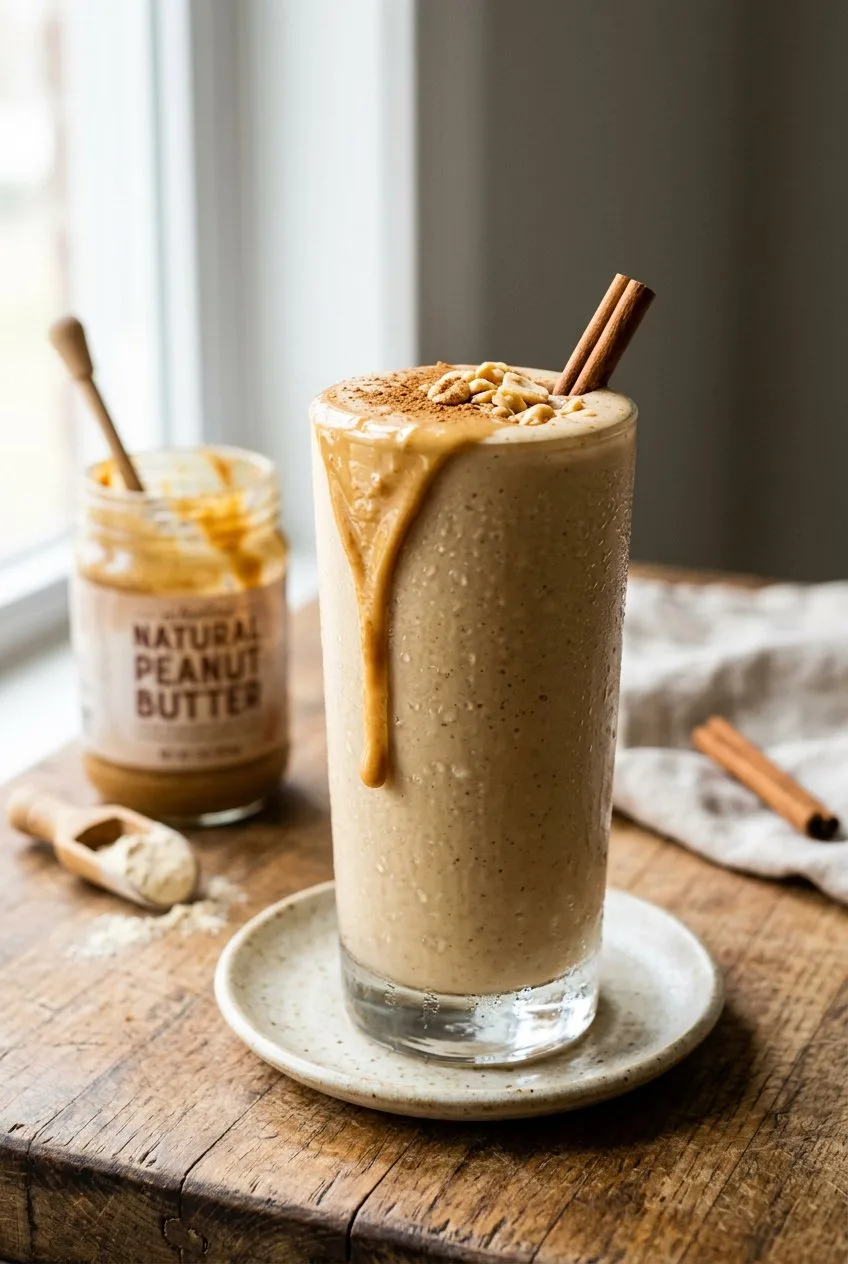
Low Sugar Peanut Butter Protein Smoothie
I spent a good while thinking protein shakes were inherently virtuous. Then I started reading the labels on flavoured protein powders and discovered that many of them contain more sugar than a biscuit. Chocolate fudge brownie flavour. Salted caramel swirl. They taste amazing and the sugar is the reason. Devastatingly.
This smoothie uses plain unsweetened protein powder — or vanilla with zero added sugar — so that the peanut butter and cinnamon do the actual flavour work. Natural peanut butter (just peanuts, nothing else) is already slightly sweet on its own. The cinnamon adds warmth. The result tastes indulgent without being sweet in a way that unravels the whole point.
This keeps me full until lunch. On difficult days, it keeps me going until dinner. I am not proud of this but I am also not complaining.
*Per USDA FoodData Central

The Swap Snapshot
| Typical Version | The Sugar Swap Version | Sugar per serving* |
|---|---|---|
| Flavoured Protein Powder Smoothie Sweetened chocolate or vanilla flavoured protein powder, regular milk, banana — 14g sugar |
Low Sugar Peanut Butter Protein Smoothie Unsweetened plain protein powder, natural peanut butter, unsweetened soy milk, cinnamon — 3g sugar |
14g→3g |
*Based on USDA FoodData Central values. The Sugar Swap is not medical or nutritional advice.
Ingredients
Serves 1 · Scale as needed
- 1 scoop (30g) ⇄ unsweetened vanilla protein powder — the flavoured powder swap
- 2 tbsp natural peanut butter (just peanuts, no added sugar)
- 240ml ⇄ unsweetened soy milk — the regular milk swap
- ½ tsp ground cinnamon
- 5–6 ice cubes
- 1 tsp monk fruit granulated (optional — taste first)

Instructions
- 1
Add soy milk to the blender first, followed by peanut butter, protein powder, cinnamon and ice.
⇄ Swap NoteUnsweetened soy milk replaces regular dairy milk — it has more protein than other plant milks and a neutral flavour that doesn’t compete with the peanut butter. Regular milk adds around 11g sugar per 240ml from natural lactose. Unsweetened soy milk has under 1g.
- 2
Blend on high for 45–60 seconds until completely smooth and thick.
- 3
Taste — if you want it slightly sweeter, add monk fruit granulated and blend for 10 more seconds. Pour and serve immediately.
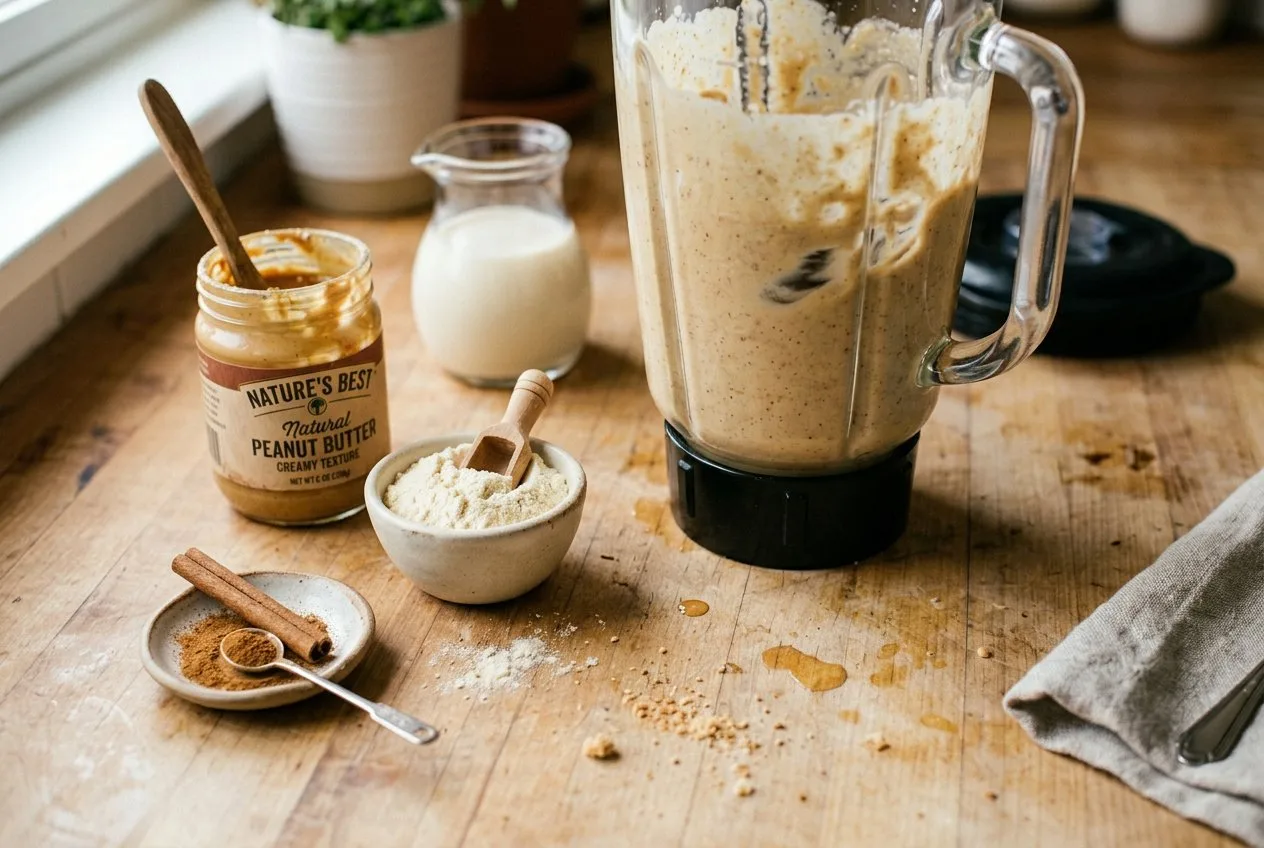
Natural peanut butter, unsweetened protein powder, cinnamon — the flavour is all there, the added sugar is not.
The Protein Powder Swap: Unsweetened vs. Flavoured
Flavoured protein powders — especially chocolate and vanilla varieties — almost always contain added sugar, sweeteners, or both. A standard scoop of a popular chocolate flavour protein powder can contain 6–8g of added sugar, before anything else goes in the blender. Unsweetened plain or vanilla protein powder contains 0g added sugar and lets the actual ingredients — in this case peanut butter and cinnamon — do the flavour work. The swap from regular dairy milk to unsweetened soy milk removes another 10g of natural lactose. The combination brings total sugar from around 14g down to 3g. See the Swap Guide for a full comparison of plant milk swaps.
Common Mistakes
- Using peanut butter with added sugar. Most commercial peanut butters contain sugar. Check the label — ingredients should be peanuts and nothing else. The difference in flavour is noticeable too.
- Adding the protein powder last. Add it with the liquid so it blends in fully. Protein powder added at the end tends to clump at the top.
- Using sweetened soy milk. Many soy milks are sweetened — check the label for “unsweetened” specifically. Some brands add 6–8g sugar per serving.
Storage
Best drunk immediately while thick and cold. If storing, keep in a sealed jar in the fridge for up to 12 hours — it thickens further as it sits, so add a splash of soy milk and shake before drinking. Not suitable for freezing.
Nutrition per serving
*Per USDA FoodData Central · Typical version: 14g sugar · The Sugar Swap is not medical or nutritional advice.
Frequently Asked Questions
Can I use almond milk instead of soy milk?
Yes — unsweetened almond milk works well and has even fewer calories. Just make sure it says unsweetened on the label. The smoothie will be slightly less thick and have a bit less protein, but the flavour is just as good.
What protein powder do you recommend?
Any unflavoured or plain vanilla protein powder with 0g added sugar. Whey, pea protein, and hemp protein all work here. Read the ingredients — if sugar, dextrose, or maltodextrin appear in the first few ingredients, choose a different brand.
Can I use almond butter instead of peanut butter?
Absolutely — natural almond butter (almonds only) is a great swap and gives the smoothie a slightly milder, nuttier flavour. Same rule applies: check the label and avoid anything with added sugar or oils.