
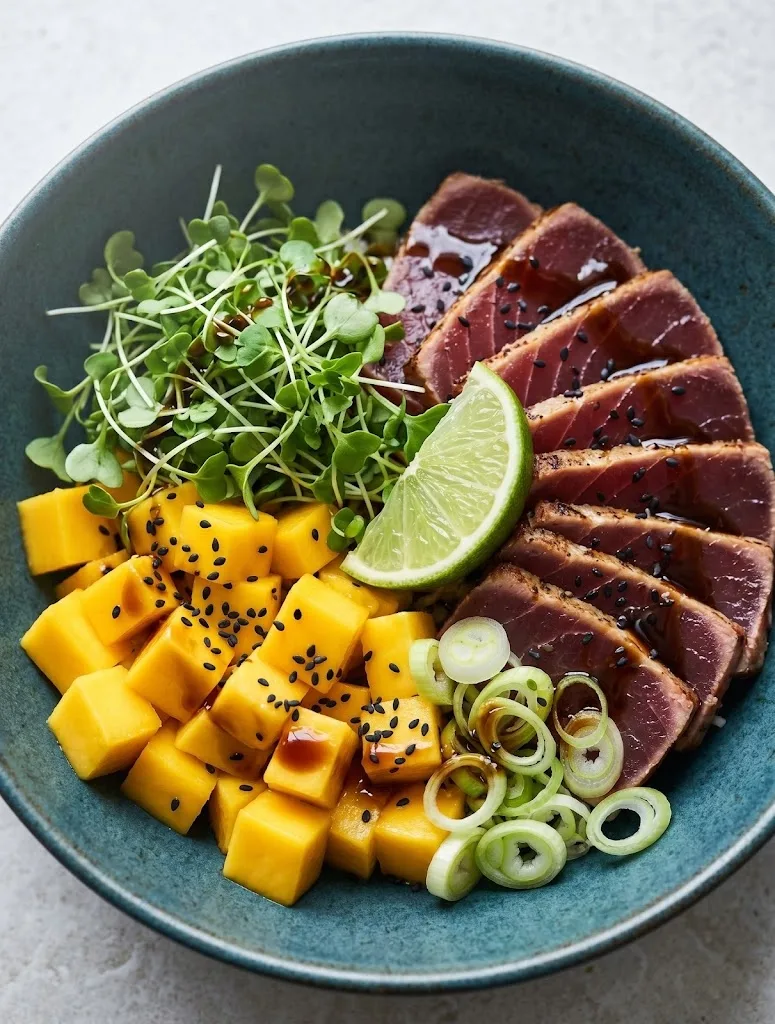
Seared Sesame Tuna with Mango Salsa
I used to gravitate to the ‘sesame ginger’ glazed tuna at the seafood counter. It looked glamorous and tasted expensive. It also, as I later discovered, contained roughly as much sugar as a can of soft drink. The tuna was incidental to the experience.
Fresh mango with lime was the substitute I almost didn’t try because it seemed too obvious. Why would fruit compete with a proper glaze? Because, as it turns out, ripe mango is sweet in a way that commercial teriyaki is trying to approximate — and failing. The real thing is brighter, more interesting, and infinitely better for you.
The tuna should be sushi-grade and served pink in the middle. Overcooked tuna is a different and inferior dish. Sear hot and fast — 2–3 minutes per side maximum. The sesame crust tells you when it’s ready: golden seeds, not burnt ones.
*Per USDA FoodData Central

The Swap Snapshot
| Typical Version | The Sugar Swap Version | Sugar per serving* |
|---|---|---|
| Tuna with Teriyaki Glaze Bottled teriyaki — corn syrup, sugar, often 15–22g per serving |
Sesame Tuna with Fresh Mango Tuna, sesame seeds, fresh mango — sweetness from real fruit |
22g→10g |
*Based on USDA FoodData Central values. The Sugar Swap is not medical or nutritional advice.
Ingredients
Serves 2 · Scale as needed
- 2 x 150g tuna steaks, sushi-grade
- 2 tbsp sesame seeds, for crusting
- 1 ripe mango ⇄ diced into cubes ⇄ the sweetness swap
- 1 tbsp sesame oil
- Sea salt and black pepper

Instructions
-
1
Dice the mango into small, even cubes and set aside. That’s it — no mixing, no dressing. The mango is there to be itself.
-
2
Press each tuna steak into the sesame seeds on both sides to coat evenly.
-
3
Heat sesame oil in a pan over very high heat. Sear the tuna for 2–3 minutes per side — it should be golden on the outside and pink in the middle.
⇄ Swap NoteWithout a glaze, the sesame crust is doing all the visual and flavour work. High heat is essential — the seeds need to toast and colour properly. Don’t be tempted to turn the heat down.
-
4
Slice the tuna against the grain and serve immediately with the fresh diced mango alongside.
Why I Made This Swap
Commercial teriyaki and sesame-ginger glazes contain 15–22g of refined sugar per serving from corn syrup and added sweeteners. Fresh mango provides natural sweetness alongside vitamin C, folate, and fibre — with the only sugars being those naturally present in the fruit. Tuna delivers 42g of protein per serving with omega-3 fatty acids. This is the swap that makes the fish the main event.
Common Mistakes
- Overcooking the tuna. Tuna should be pink in the middle — rare to medium-rare. Fully cooked tuna is dry and disappointing. High heat, short time.
- Using an underripe mango. The mango is the sweetness in this dish. An underripe one is sour and starchy. It needs to be fragrant and give slightly to pressure.
- Using regular sesame seeds without toasting. The seeds toast in the hot pan as the tuna sears. If your pan isn’t hot enough, the seeds don’t colour and the crust lacks flavour.
Storage
Best eaten immediately while the tuna is warm and the crust is crisp. The mango salsa can be made up to 2 hours ahead and kept covered in the fridge.
Nutrition per serving
*Per USDA FoodData Central · Typical version: 22g sugar · The Sugar Swap is not medical or nutritional advice.
Frequently Asked Questions
Is it safe to eat tuna that’s pink in the middle?
As long as you’re using high-quality, sushi-grade tuna. Ask your fishmonger specifically for sashimi-grade tuna for this recipe.
Can I use frozen tuna?
Yes — thaw completely in the fridge and pat very dry before pressing into the sesame seeds. Frozen fish often has more moisture.
Can I substitute the mango?
Fresh pineapple or papaya work well. Avoid canned fruit — the syrup adds sugar and the texture is wrong.
