
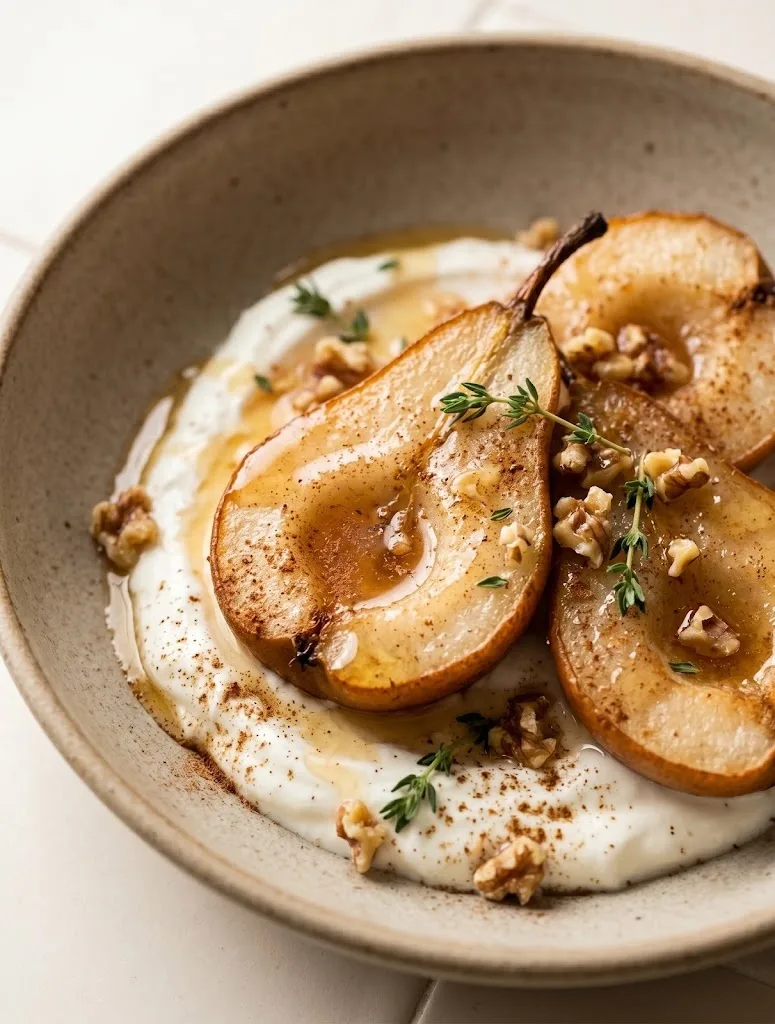
Roasted Pears with Greek Yogurt
My approach to dessert was straightforward: roast a piece of fruit until it was good, then drizzle honey over it until it was better. I was essentially adding refined sugar to something that was already naturally sweet. My body made it fairly clear it had opinions about this.
When sugar and I fell out, I tried roasting a pear without the honey, fully expecting disappointment. What I got instead was a pear that tasted intensely of itself — deeply sweet, almost caramel-like from the oven’s heat, with that soft, jammy texture that makes roasted fruit so compelling. The Greek yogurt alongside cut through it perfectly. No honey required. The pear had been doing all the work the whole time.
Use a ripe but firm pear — Bosc or Conference work particularly well. Too ripe and it collapses in the oven; not ripe enough and it takes ages to soften. You’re looking for a pear that gives slightly when pressed at the top.
*Per USDA FoodData Central

The Swap Snapshot
| Typical Version | The Sugar Swap Version | Sugar per serving* |
|---|---|---|
| Roasted Fruit with Honey Honey drizzled over roasted fruit — adds up to 10g refined sugar to naturally sweet fruit |
Roasted Pears with Plain Greek Yogurt Pear, Greek yogurt, walnuts, cinnamon — the fruit does all the sweetening |
22g→12g |
*Based on USDA FoodData Central values. The Sugar Swap is not medical or nutritional advice.
Ingredients
Serves 2 · Scale as needed
- 1 medium ripe but firm pear, halved and cored
- ½ cup ⇄ plain full-fat Greek yogurt ⇄ the dessert swap
- 1 tbsp walnuts, roughly chopped
- ¼ tsp ground cinnamon

Instructions
-
1
Heat oven to 190°C (375°F).
-
2
Place the pear halves cut-side up in a small baking dish with a splash of water. Sprinkle with cinnamon. Roast for 20–25 minutes until tender and lightly golden.
⇄ Swap NoteWithout honey to help browning, the water in the dish prevents burning while allowing the pear’s own sugars to caramelise on the cut surface. This is the swap at work — the natural sugars concentrate as moisture evaporates.
-
3
Place the warm roasted pears over Greek yogurt, scatter with walnuts, and serve immediately.
Why I Made This Swap
Roasting fruit with honey or maple syrup adds 10–12g of refined sugar to something that is already naturally sweet. Roasting the pear at 190°C concentrates its natural sugars through moisture evaporation and caramelisation — creating a deep, sweet flavour without any addition. Plain Greek yogurt provides 9g of protein alongside the dessert — making this one of the most nutritious ways to end a meal.
Common Mistakes
- Using vanilla or sweetened yogurt. The plain yogurt tang against the sweet pear is what makes this work. Sweetened yogurt turns the whole thing cloying.
- Using an overripe pear. Overripe pears collapse into mush in the oven. You want firm but ripe — it should give slightly to pressure at the top but hold its shape when halved.
- Skipping the walnuts. The crunch is important. Without texture, you have two soft things on a plate. The walnuts also add healthy fats and magnesium.
Storage
Roasted pears keep in the fridge for 1 day and are actually lovely cold the next morning with yogurt as a breakfast. Serve at room temperature or gently warm in the oven for 5 minutes.
Nutrition per serving
*Per USDA FoodData Central · Typical version: 22g sugar · The Sugar Swap is not medical or nutritional advice.
Frequently Asked Questions
Can I use apples instead?
Yes — apples work beautifully. They need slightly longer in the oven, around 30 minutes. Cinnamon is particularly good with apple.
Do I need to peel the pear?
No — the skin softens beautifully in the oven and contains most of the fibre. Leave it on.
Can I make this ahead?
Roast the pears ahead and store in the fridge. Serve cold or return to a warm oven for 5 minutes. Always add the yogurt and walnuts fresh.
