
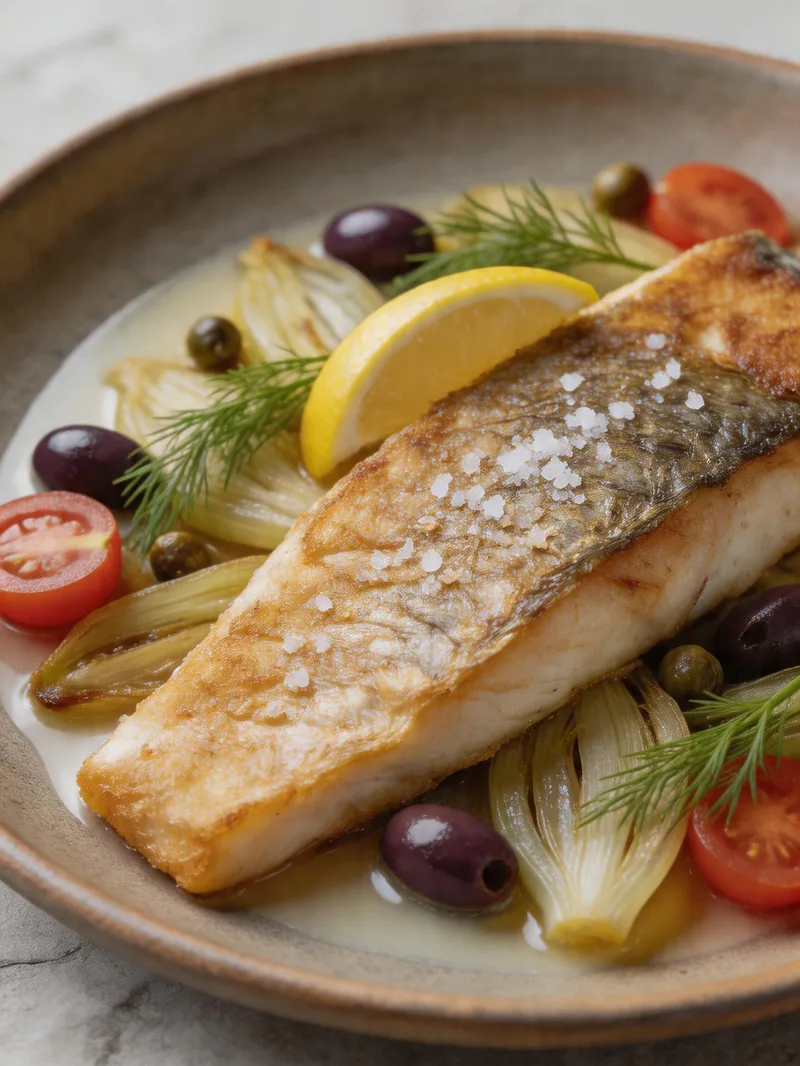
Pan-Seared Sea Bass with Fennel
I used to believe that fish needed a sauce to be interesting. A sweet-and-sour. A honey glaze. Something from a bottle that would do the work the fish wasn’t doing. The fish, as I now understand, was doing plenty — I just couldn’t taste it through the sugar.
The fennel swap was the one that most surprised me. I’d always thought of fennel as the aniseed thing you avoided at the market. Slowly caramelised in olive oil until it’s soft, silky, and sweet? Completely different vegetable. The sweetness comes entirely from the fennel itself — no sugar required.
Don’t rush the fennel. It needs a full 8–10 minutes on medium heat to release its natural sugars and soften properly. This is not a step to skip or speed up — the fennel is the whole point of the dish.
*Per USDA FoodData Central

The Swap Snapshot
| Typical Version | The Sugar Swap Version | Sugar per serving* |
|---|---|---|
| Sweet & Sour Fish Bottled sweet-sour sauce or honey glaze — 15–20g sugar added to delicate fish |
Sea Bass with Caramelised Fennel Sea bass, fennel, lemon, olive oil — the vegetable provides the sweetness |
18g→2g |
*Based on USDA FoodData Central values. The Sugar Swap is not medical or nutritional advice.
Ingredients
Serves 2 · Scale as needed
- 2 x 150g sea bass fillets, skin-on
- 1 small ⇄ fennel bulb, thinly sliced ⇄ the sweetness swap
- 1 tbsp extra virgin olive oil
- 1 tbsp ⇄ fresh lemon juice ⇄ the sauce swap
- pinch flaky sea salt
- handful Kalamata olives (optional)

Instructions
-
1
Heat olive oil in a wide skillet over medium heat. Add the thinly sliced fennel with a pinch of salt and cook for 8–10 minutes, stirring occasionally, until soft, golden, and sweet.
⇄ Swap NoteThe fennel provides the natural sweetness of this dish through slow caramelisation — this is the swap working. Don’t rush it and don’t add sugar to speed it up. The patience is the recipe.
-
2
Pat the sea bass completely dry. Season generously with salt on both sides.
-
3
Push the fennel to the side of the pan, increase heat to high, and add the sea bass skin-side down. Cook for 3–4 minutes without moving until the skin is crisp and golden.
-
4
Flip carefully and cook for a further 2 minutes. Squeeze lemon juice over the fish and fennel, add olives if using, and serve immediately.
Why I Made This Swap
Sweet-and-sour sauces and fish glazes regularly add 15–20g of refined sugar to naturally sugar-free seafood. Slow-caramelised fennel provides natural sweetness through its own anethole compounds, which release during cooking and create a mellow, sophisticated sweetness with zero added sugar. Sea bass itself delivers 34g of protein with omega-3 fatty acids.
Common Mistakes
- Slicing the fennel too thick. Thick slices won’t soften and caramelise properly in time. Slice as thinly as possible — a mandoline is ideal.
- Rushing the fennel. Caramelisation takes time at medium heat. High heat burns the outside before the inside softens. Medium and patient is the method.
- Moving the fish. Once the sea bass is in the pan skin-side down, leave it alone. It will release naturally when the skin is properly crisped.
Storage
Sea bass is best eaten immediately. The caramelised fennel keeps in the fridge for 2 days and is excellent reheated alongside eggs for breakfast.
Nutrition per serving
*Per USDA FoodData Central · Typical version: 18g sugar · The Sugar Swap is not medical or nutritional advice.
Frequently Asked Questions
Can I use another white fish?
Snapper, bream, or cod all work beautifully with fennel. The technique is the same — dry the fish, sear the skin first.
Does fennel taste strongly of aniseed?
Raw fennel has a distinct anise flavour. Cooked slowly, it becomes much milder and sweeter — almost unrecognisable. Don’t judge it raw.
What to serve alongside?
The Herb-Roasted Mediterranean Veg or a simple dressed green salad. Keep it simple — the fish and fennel are doing the work.
