
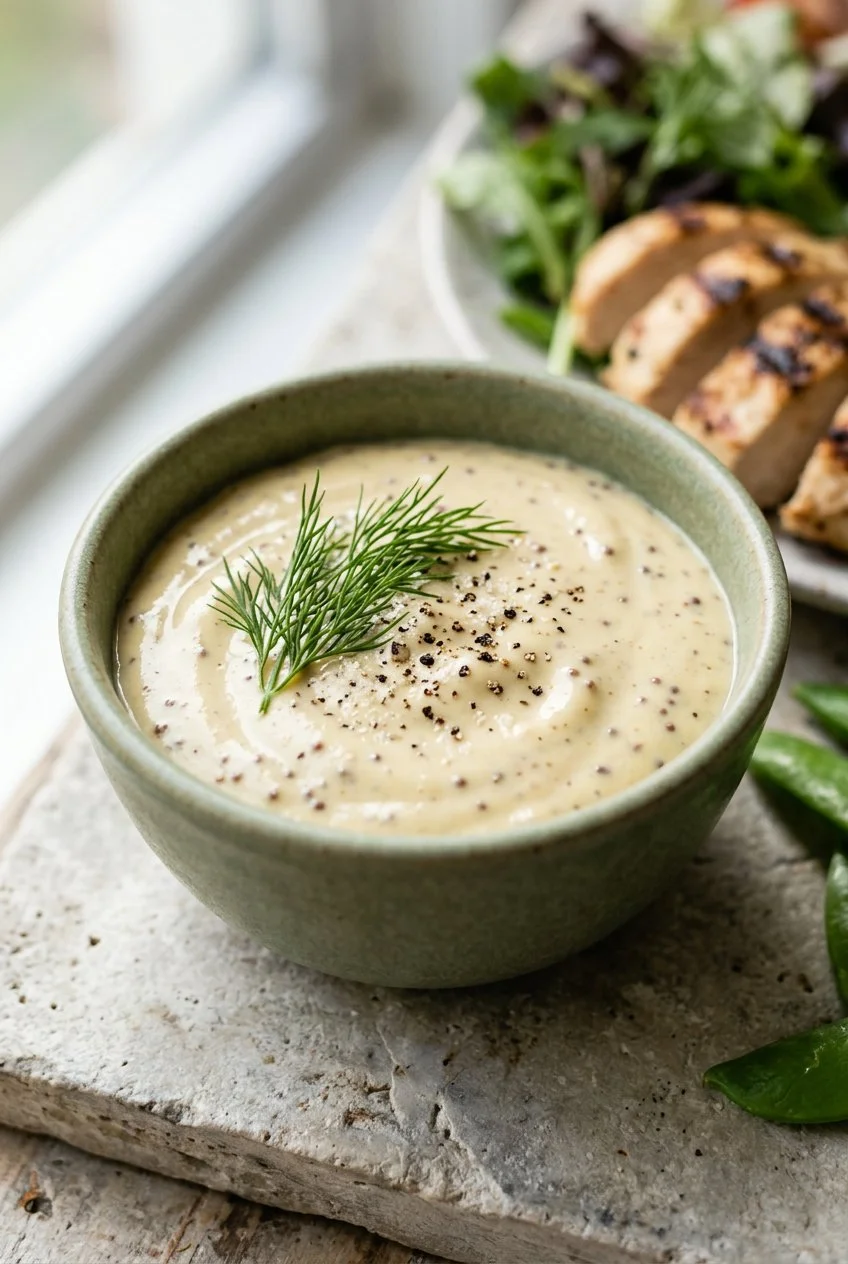
Low Sugar Honey Mustard Sauce — The Dipping Swap
Honey mustard is one of those sauces that sounds healthy — it has the word honey in it, which our brains interpret as natural and fine. And then you check the label and realise a quarter cup of honey is around 60g of sugar. Not fine.
This version is creamy, properly tangy, with that sweet-sharp balance that makes honey mustard so good with chicken or as a salad dressing. Greek yogurt gives it a richness that mayo never quite manages, and monk fruit provides the sweet note without any of the sugar.
Thirty minutes in the fridge and it's better than anything from a bottle.
*Per USDA FoodData Central

The Swap Snapshot
| Typical Version | The Sugar Swap Version | Sugar per 2 tbsp* |
|---|---|---|
| Honey Mustard Dressing ¼ cup honey, sugary mayo — naturally sweet, unnaturally sugary | Low Sugar Honey Mustard Sauce Dijon mustard, Greek yogurt, monk fruit | 10g→1g |
*Based on USDA FoodData Central values. The Sugar Swap is not medical or nutritional advice.
Ingredients
Makes about 1 cup · 8 servings (2 tbsp each)
- ½ cup plain Greek yogurt (full-fat for creaminess)
- ¼ cup Dijon mustard
- 2 tbsp yellow mustard
- 1 tbsp ⇄ monk fruit granulated or liquid — the sweetener swap
- 1 tsp lemon juice
- pinch cayenne pepper (optional)

Instructions
- 1
In a small bowl, whisk together the Greek yogurt, Dijon mustard, and yellow mustard until smooth.
- 2
Stir in the monk fruit and lemon juice. Add cayenne if using.
⇄ Swap NoteTaste before adding all the monk fruit — liquid monk fruit is more concentrated than granulated. Start with half and adjust upwards. You want sweet but not cloying.
- 3
Refrigerate for at least 30 minutes before serving — the flavours come together beautifully once chilled.
How to Mimic Honey's Sweetness Without the Carbs
Honey's appeal in a mustard sauce is its floral, round sweetness — not the sugar itself. Monk fruit provides the same sweet note with zero glycaemic impact. Greek yogurt replaces mayo as the creamy base, adding protein and a pleasing tang that actually complements the mustard better. Check the Swap Guide for a full rundown on monk fruit and when to use it.
Common Mistakes
- Skipping the chill time. This sauce genuinely needs 30 minutes in the fridge. The mustard mellows, the monk fruit integrates, and the yogurt firms up. It's a different sauce after resting.
- Using low-fat yogurt. Too watery. Full-fat gives you the right consistency.
Storage
Store in a sealed container in the fridge for up to 5 days. Stir before using as it may separate slightly. Does not freeze well.
Nutrition per serving (2 tbsp)
*Per USDA FoodData Central · Typical version: 10g sugar per 2 tbsp · The Sugar Swap is not medical or nutritional advice.
Frequently Asked Questions
Can I use this as a salad dressing?
Yes — thin it with a teaspoon of water or extra lemon juice until it reaches a pourable consistency. It's excellent over a grilled chicken salad.
Can I use stevia instead of monk fruit?
You can, but some stevia brands have a bitter aftertaste in cold, uncooked sauces. Monk fruit is cleaner here. See the Swap Guide for alternatives.
