
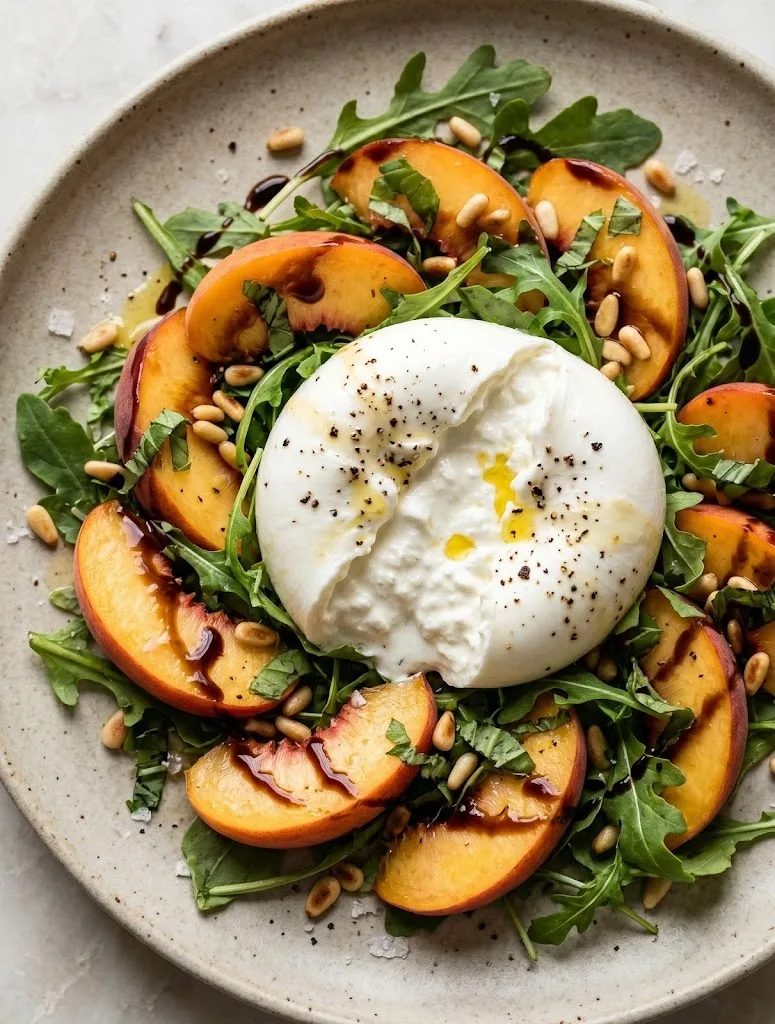
Burrata and Peach Salad
I was a balsamic glaze devotee. I put it on everything — salads, roasted veg, cheese boards, probably my morning toast if I'm honest. I thought that sticky, sweet reduction was what made food sophisticated. Turns out it was just what made food sugary.
When sugar and I had our falling out, balsamic glaze was one of the first casualties. And that's when I discovered something wonderful: when you stop drowning fruit in syrup, the fruit actually tastes like itself. This burrata and peach salad with a proper drizzle of good olive oil is now my go-to for every occasion where I want to look like I've made a great deal of effort with absolutely none.
The non-negotiable here is quality olive oil. Without the glaze to hide behind, the oil is doing all the heavy lifting — so buy the good stuff. You'll taste the difference, and so will everyone you serve this to.
*Per USDA FoodData Central

The Swap Snapshot
| Typical Version | The Sugar Swap Version | Sugar per serving* |
|---|---|---|
|
Fruit Salad with Balsamic Glaze Balsamic reduction, honey, added sugar |
Burrata & Peaches with Olive Oil Fresh burrata, ripe peach, extra virgin olive oil, basil |
24g → 9g |
*Based on USDA FoodData Central values. The Sugar Swap is not medical or nutritional advice.
Ingredients
Serves 2 · Scale as needed
- 4 oz fresh burrata cheese
- 1 ripe peach, sliced
- 1 cup fresh arugula
- 1 tbsp ⇄ extra virgin olive oil (high quality) — the swap
- handful fresh basil leaves
- pinch flaky sea salt

Instructions
-
1
Lay a generous bed of arugula on a wide plate or shallow bowl.
-
2
Place the burrata in the centre and break it open gently — let that creamy centre spill out. This is the moment.
⇄ Swap NoteWithout the sticky glaze to bind everything, the burrata's creamy centre becomes the natural sauce for the peaches. Don't hold back — break it properly.
-
3
Arrange the peach slices around and over the burrata.
-
4
Drizzle generously with your best olive oil. Scatter the basil leaves. Finish with a good pinch of flaky sea salt and serve immediately.
Why I Made This Swap
Balsamic glaze sounds fancy but it's highly concentrated vinegar with a significant amount of added sugar — often 10–15g per two tablespoons. Swapping it for a generous pour of high-quality extra virgin olive oil brings healthy fats, a complex fruity flavour, and zero added sugar. The peach gets to taste like a peach. The burrata gets to taste like burrata. Everyone wins.
Common Mistakes
-
Using underripe peaches. Without sugar to prop them up, the peaches need to be perfectly ripe and fragrant. If they're not, this salad won't sing.
-
Using cheap olive oil. The oil is the dressing. It needs to be good. A grassy, fruity extra virgin — not the light stuff.
-
Making it too far ahead. Burrata waits for no one. Once it's broken open, eat it within 15 minutes.
Storage
This is a make-and-eat dish. Burrata loses its magic once opened — it weeps and turns watery. If you must prep ahead, keep everything separate and assemble just before serving.
Nutrition per serving
*Per USDA FoodData Central · Typical version: 24g sugar · The Sugar Swap is not medical or nutritional advice.
Frequently Asked Questions
Can I use mozzarella instead of burrata?
You can, but you'll lose that creamy, liquid centre that makes this dish. Fresh mozzarella works in a pinch — just know it's a slightly different experience. Burrata is the point of the dish, really.
What if peaches aren't in season?
Fresh figs are a brilliant alternative in autumn — they have a similar sweetness and luxurious texture. Heirloom tomatoes work beautifully too, turning this into more of a caprese situation. Nectarines are the obvious swap when peaches are unavailable.
Can I add a small amount of balsamic vinegar — not glaze?
A tiny splash of aged balsamic vinegar (not the glaze, which has added sugar) adds lovely acidity with much less sugar. Check the label — you want one with no added sugar in the ingredients.
